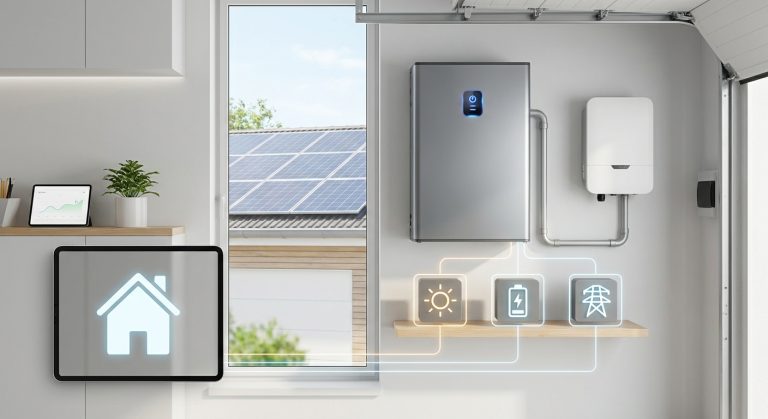
This checklist helps installers and project buyers collect the information required before commissioning a residential LiFePO4 battery.
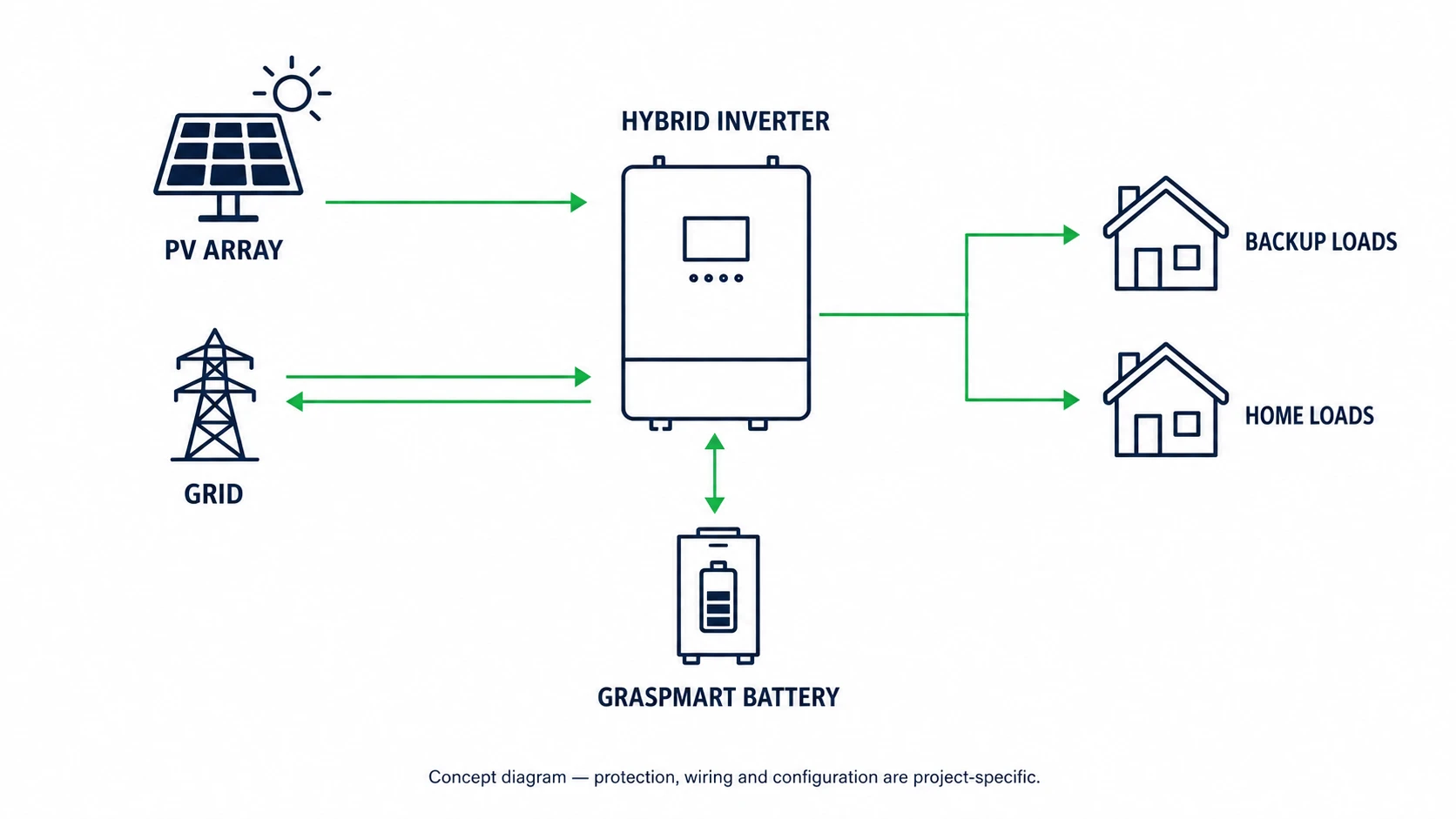
1. Confirm the objective
Define solar self-consumption, essential-load backup, whole-home backup, time-of-use charging or off-grid operation.
2. Record exact equipment
- Battery model, voltage and quantity
- Inverter brand, model and firmware
- PV size and charging capability
- Backup circuits and generator requirement
3. Calculate energy and power separately
Average load × hours estimates AC energy. Add allowance for battery operating window, inverter losses and reserve. Separately record continuous load and starting demand.
| Check | Unit | Purpose |
|---|---|---|
| Overnight use | kWh | Stored energy |
| Continuous load | kW | Sustained output |
| Starting load | kW/seconds | Motor starting |
4. Inspect the location
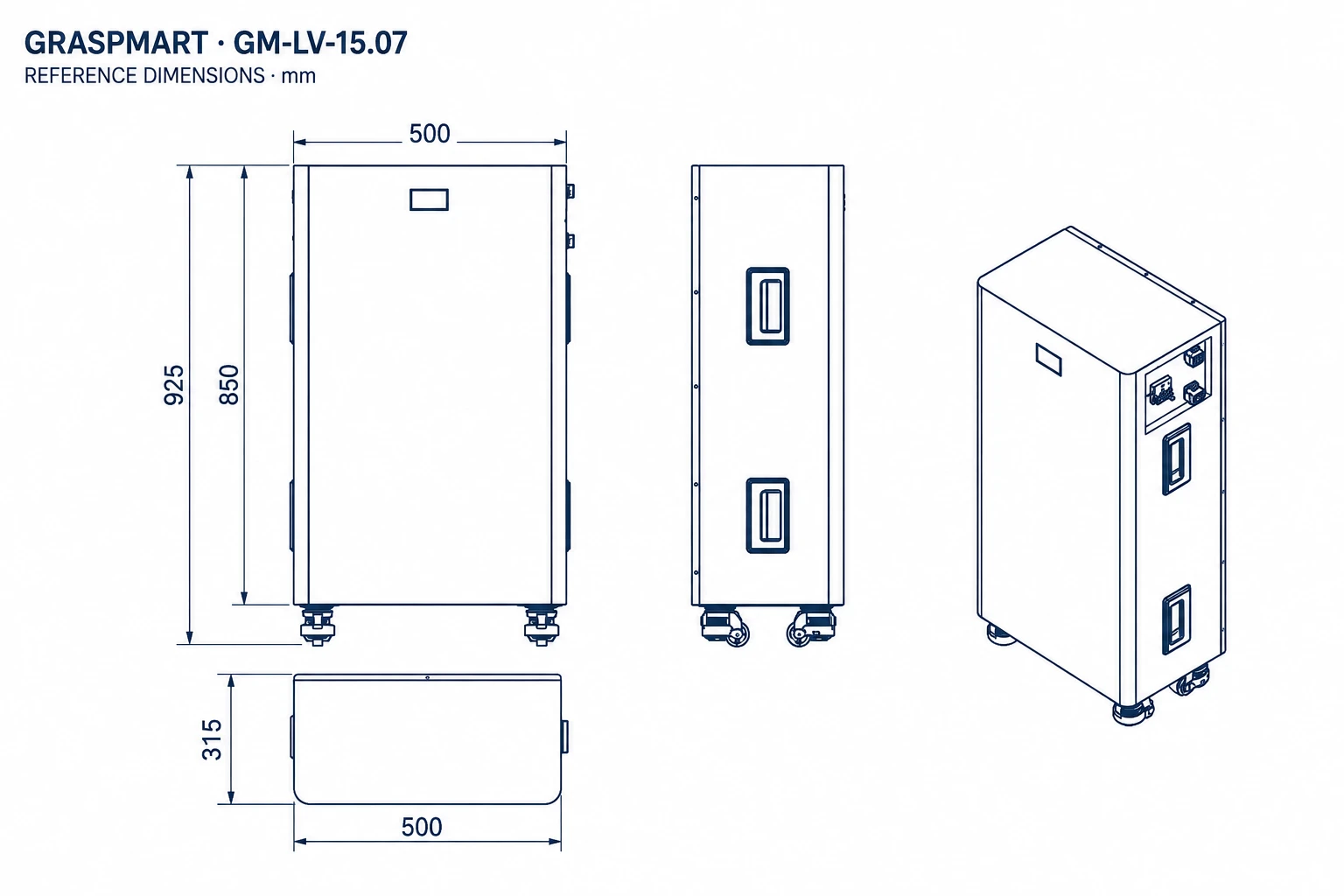
Record temperature, sunlight, water exposure, wall or floor construction, clearances, weight, package dimensions and access route.
5. Define cables and protection
Verify DC cable size, length, terminals, torque, fuse/breaker/isolator and earthing according to the manual and local rules.
6. Verify communication
Check CAN/RS485 protocol, cable pinout, inverter profile, firmware and startup sequence. Use the compatibility review.
7. Commission and record
- Serial numbers and firmware
- Settings and torque checks
- Communication and alarms
- Controlled charge/discharge test
- Installation photos and customer handover
Review system accessories or request a project quotation.