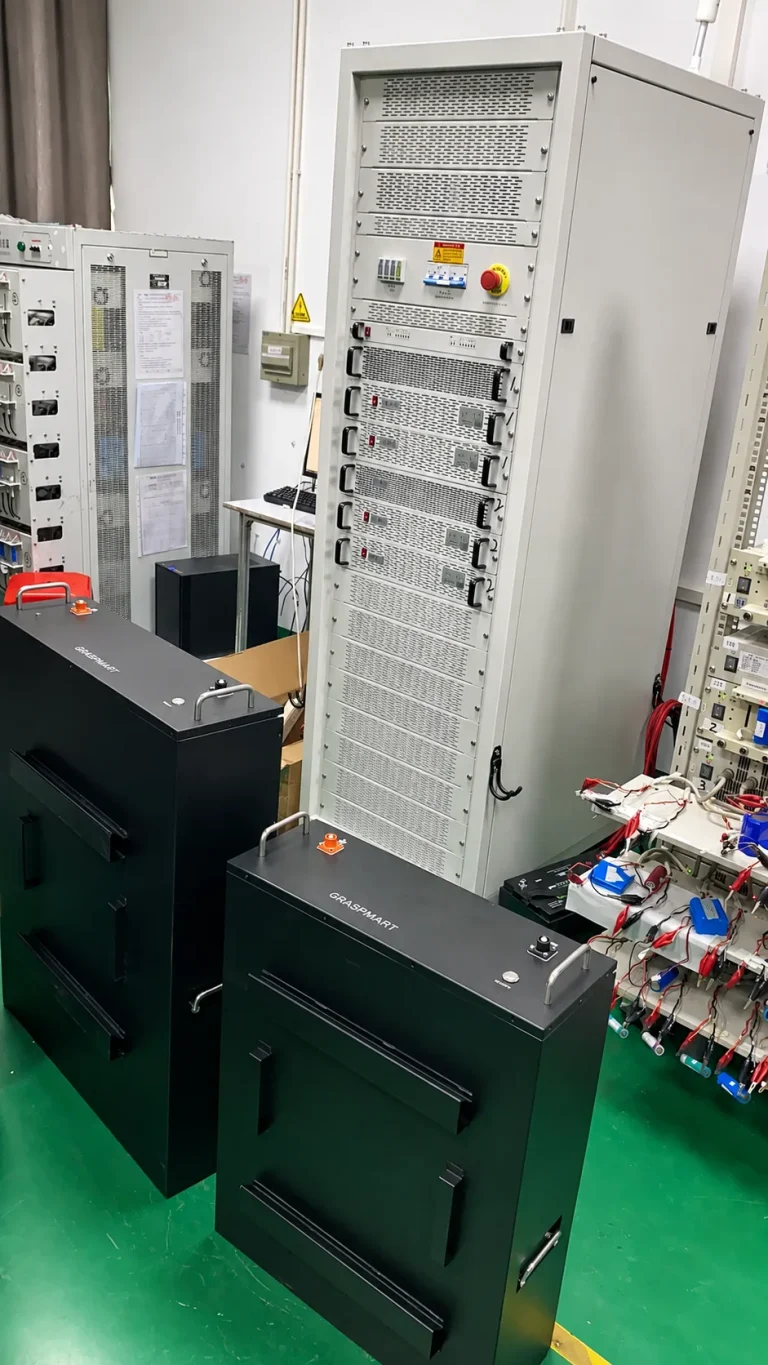
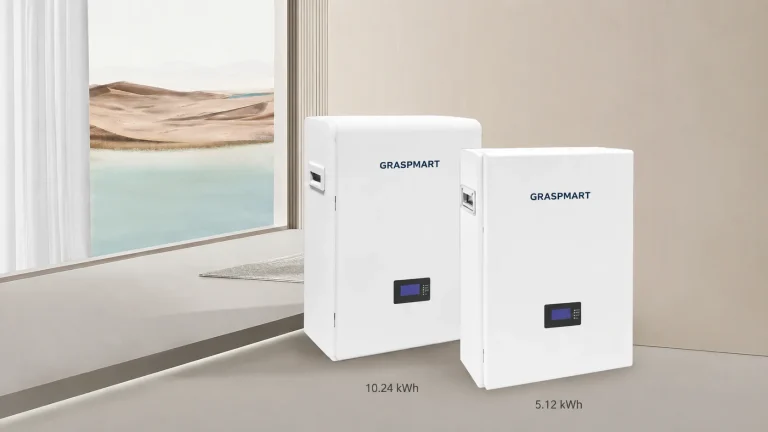
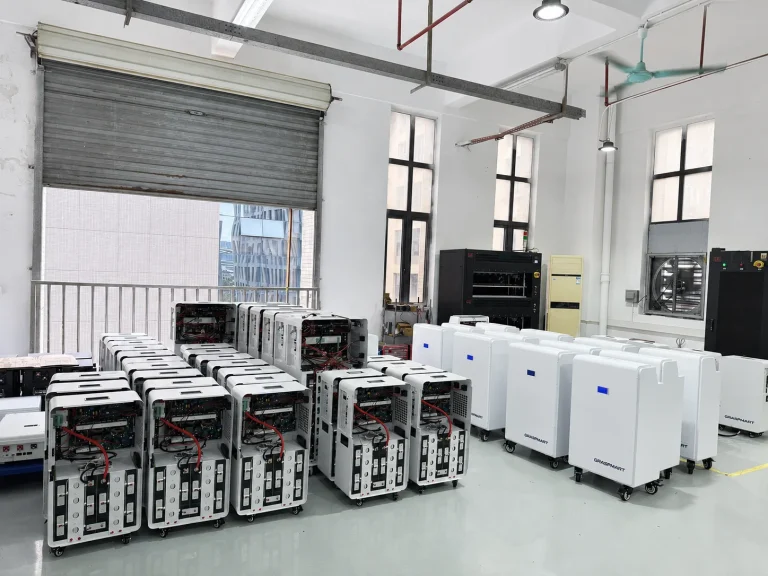
“48 V lithium battery” is a broad market description. A low-voltage LiFePO4 battery may use fifteen cells in series for a nominal 48 V pack or sixteen cells in series for a nominal 51.2 V pack. The difference affects charging voltage, discharge limits and inverter settings.
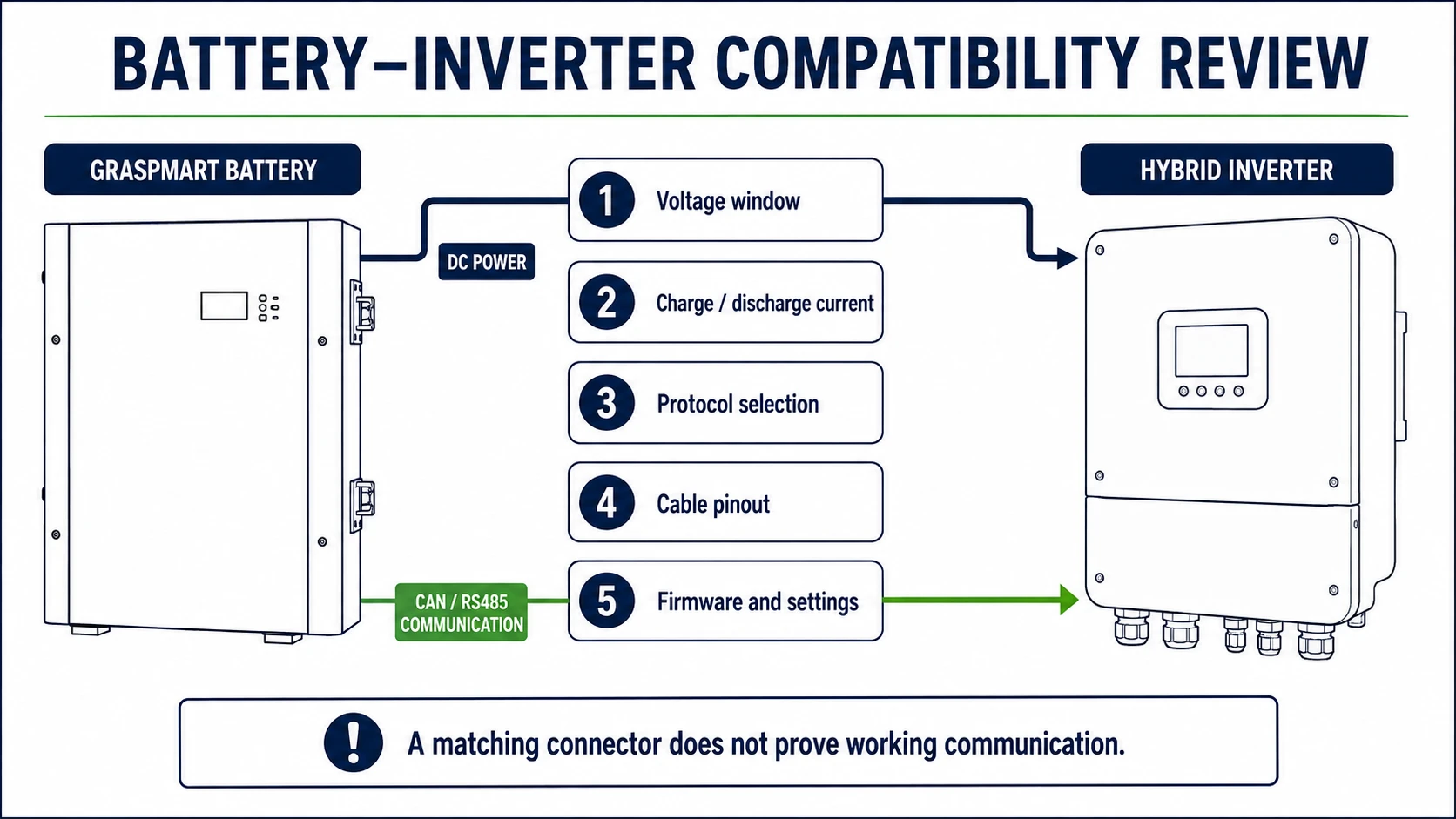
48 V and 51.2 V battery architecture
| Example | 48 V LiFePO4 | 51.2 V LiFePO4 |
|---|---|---|
| Typical series arrangement | 15S | 16S |
| Nominal cell voltage | 3.2 V | 3.2 V |
| Nominal pack voltage | 48 V | 51.2 V |
| Example at 314 Ah | 15.07 kWh | 16.08 kWh |
Use the model datasheet for charge voltage, discharge cutoff, current and temperature limits.
Check the inverter battery window
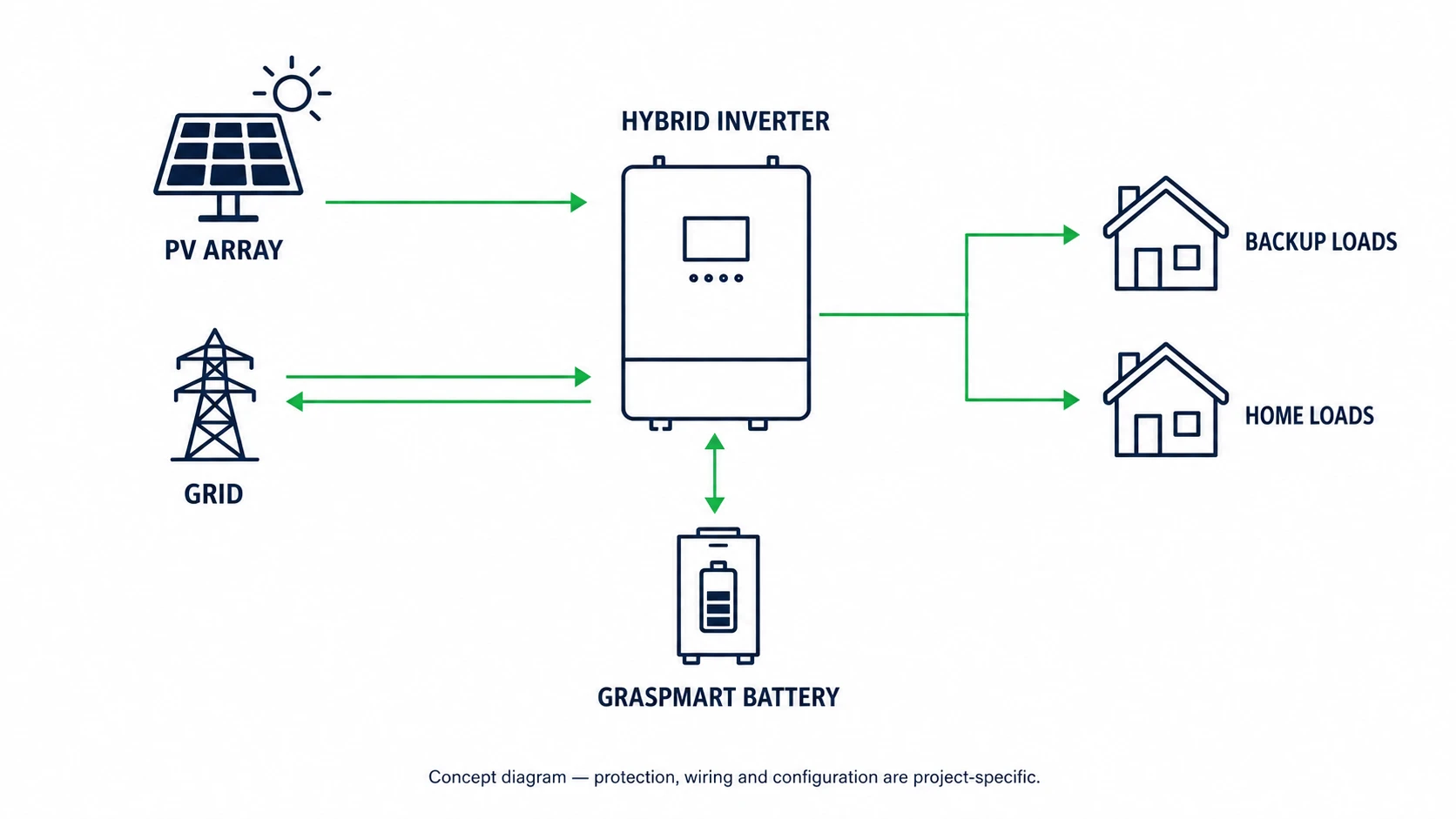
An inverter described as “48 V” may support several low-voltage lithium ranges, but that does not establish compatibility. Check its battery-voltage window, maximum current, protocol, cable pinout and supported battery quantity.
Send the exact brand, model and firmware through the inverter compatibility page.
CAN and RS485 communication
CAN or RS485 can carry state of charge, voltage, temperature, alarms and permitted current between the battery management system and inverter. Two products can both have a CAN port but use different messages or pinouts. Record the approved battery model, inverter firmware, protocol, cable, address setting and startup procedure.
Capacity and current are separate
A 51.2 V, 200 Ah battery has 10.24 kWh nominal energy. This does not establish continuous power. At nominal voltage, 100 A is about 5.12 kW DC and 200 A about 10.24 kW DC. Output is limited by the battery, inverter, cabling, protection, temperature and state of charge.
Installation checklist
- Confirm enclosure rating and installation location.
- Check dimensions, weight, access route and mounting or floor requirements.
- Use the specified cable size, terminal torque, fuse or breaker and isolation arrangement.
- Keep the clearances and temperature limits in the manual.
- Record serial numbers, firmware and inverter settings at commissioning.
Documents to request
Ask for the current datasheet, dimensions, connection diagram, communication information, manual, applicable transport documents and written warranty. Certification evidence must match the exact model and destination market.
Graspmart 48 V and 51.2 V models
The 15.07 and 16.08 kWh comparison covers two 314 Ah batteries using different nominal voltages. Choose the architecture supported by the inverter.
For pricing, send the inverter model, country, quantity and required documents through the quotation form.