HOME BATTERIES
5–20 kWh residential LiFePO4 batteries
Low-voltage LiFePO4 batteries for residential solar, backup and off-grid homes. Compare capacity, voltage, current, size and included equipment before requesting a price.
SELECT BY CAPACITY
Available battery capacities
10.24 kWh
51.2 V / 200 Ah
For compact solar homes, essential-load backup and moderate daily cycling.
- LiFePO4 chemistry
- Intelligent BMS
- CAN / RS485 platform options
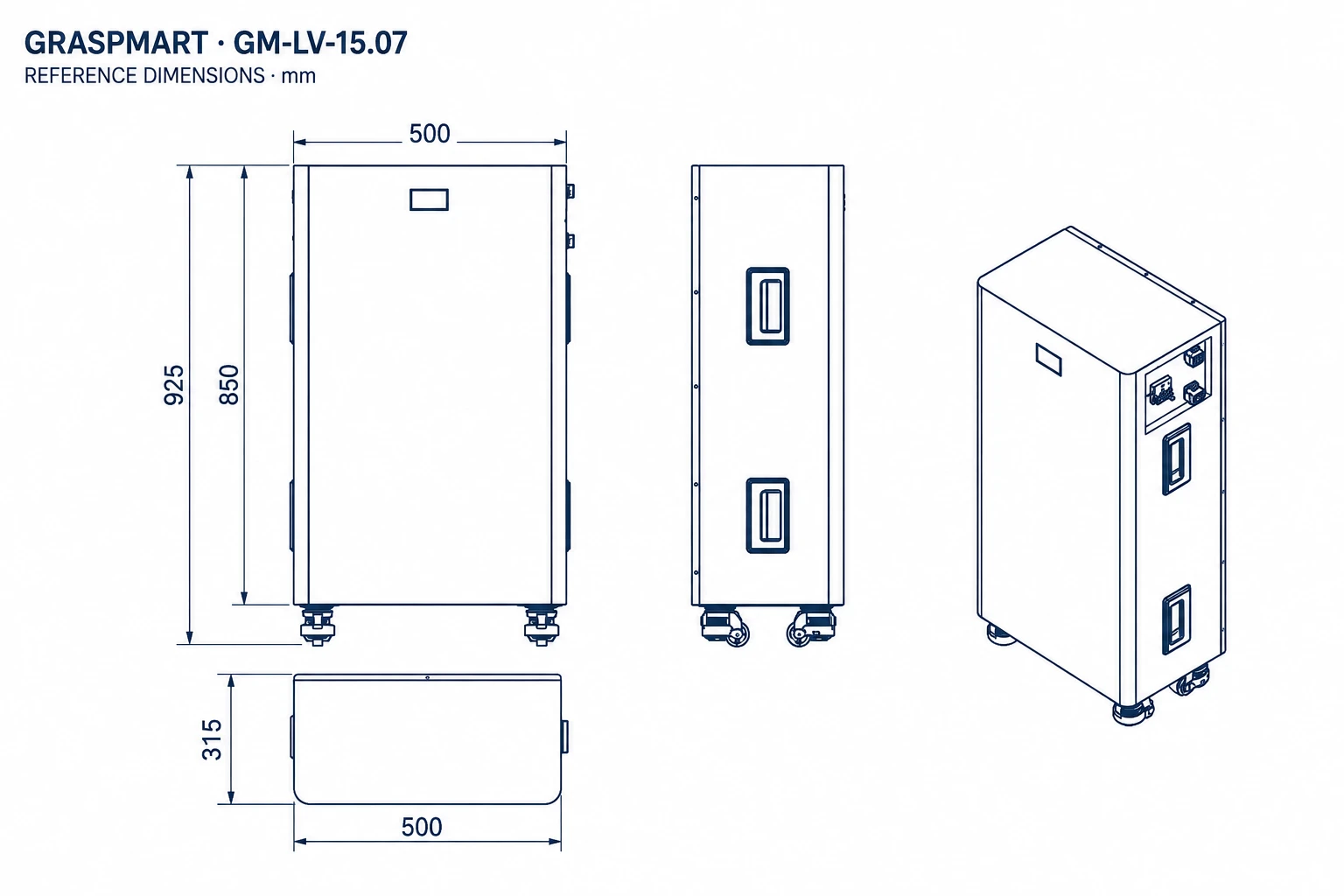
15.07 / 16.08 kWh
48 V or 51.2 V / 314 Ah
Flagship floor-standing platforms for higher energy use and whole-home support.
- Up to 100 A charge
- Up to 200 A discharge
- CAN / RS485 / RS232 by model
20.48 kWh
51.2 V / 400 Ah
Extended backup capacity for large homes and selected off-grid applications.
- Up to 200 A charge/discharge
- CAN / RS485
- Parallel expansion on validated platform
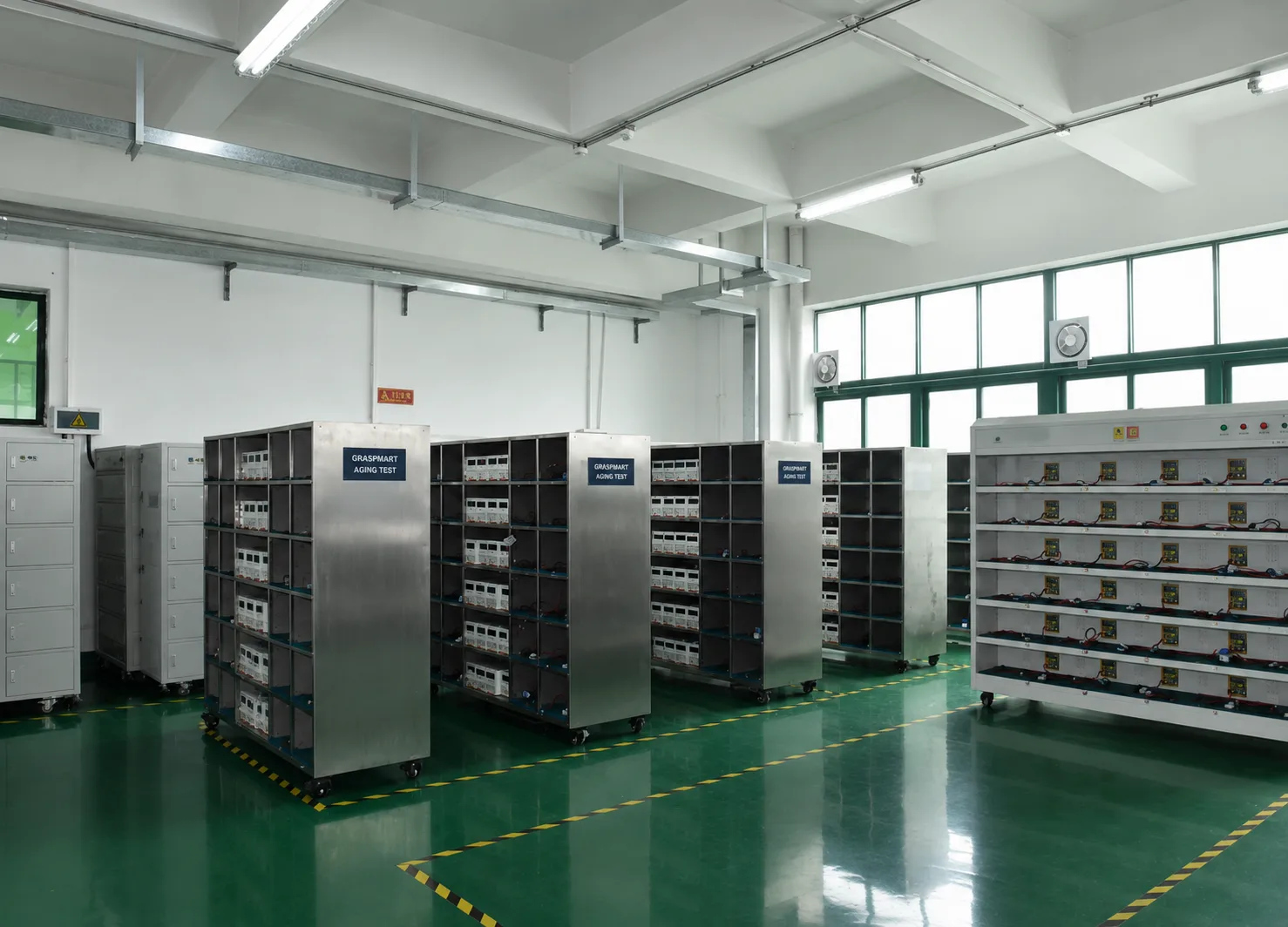
GRASPMART PRODUCT STANDARD
Checks used for the supplied battery
Cell matching, BMS protection, insulation, functional test and aging.
Exact inverter model, protocol, firmware and current-limit validation.
Datasheet, manual, transport evidence, pinout and warranty by model.
Diagnostics, error information, replaceable parts and repair support.
BEFORE WE QUOTE
Information required before quotation
Backup, solar self-consumption, tariff management or off-grid.
Brand, exact model, phase, firmware and battery port.
Environment, temperature, space and expansion plan.
Certification, language, branding, service and delivery needs.
SYSTEM ACCESSORIES
Connection, communication and installation scope
A complete battery proposal can include model-matched DC cables, CAN/RS485 communication cable, approved parallel-connection parts, mounting hardware, labels and manuals. Protection devices and conductor sizing must be confirmed against the project and local rules.
DC connection
Battery cables, terminals and project-defined isolation or protection information.
Communication
Model-specific CAN/RS485 cable, pinout and parallel addressing instructions.
Installation & OEM
Mounting parts, accessory packing list, labels, cartons and manual-language options.
Request a battery quotation
Send the load, PV system, inverter and target market.
Compare energy, voltage and installation requirements
| Reference platform | 10.24 kWh | 15.07 kWh | 16.08 kWh | 20.48 kWh |
|---|---|---|---|---|
| Nominal voltage | 51.2 V | 48 V | 51.2 V | 51.2 V |
| Capacity | 200 Ah | 314 Ah | 314 Ah | 400 Ah |
| Maximum charge current | Model-specific | 100 A | 100 A | 200 A on listed reference |
| Maximum discharge current | Model-specific | 200 A | 200 A | 200 A on listed reference |
| Dimensions, mm | Model-specific | 925 × 500 × 315 | 925 × 500 × 315 | 900 × 476 × 260 on listed reference |
| Approximate weight | Model-specific | 115 kg | 133 kg | 140 kg on listed reference |
| Product details | 10 kWh | 15 kWh | 16 kWh | 20 kWh |
The models use different voltage, current and enclosure specifications. Nominal battery energy determines available runtime; the inverter and battery current limits determine how much power can be supplied at one time.
How to choose 10, 15 or 20 kWh
Begin with the energy consumed while solar or grid power is unavailable. Multiply the average supported load in kW by the desired backup hours. Allow for the operating SOC window, conversion losses, reserve and future changes. Separately check the highest simultaneous load and motor starting power.
| Illustrative constant AC load | 10.24 kWh | 15.07 kWh | 16.08 kWh | 20.48 kWh |
|---|---|---|---|---|
| 1 kW | 8.3 h | 12.2 h | 13.0 h | 16.6 h |
| 2 kW | 4.1 h | 6.1 h | 6.5 h | 8.3 h |
| 3 kW | 2.8 h | 4.1 h | 4.3 h | 5.5 h |
Planning illustration only: nominal energy × 90% usable SOC window × 90% conversion efficiency ÷ load. These assumed percentages are not tested product specifications. Actual results vary with temperature, age, standby consumption and operating settings.
What is included in the battery proposal
- Battery configuration and electrical limits, separated from any inverter or PV equipment.
- Accessories and exclusions: power cables, communication cable, brackets, protection devices and installation labour.
- Sample terms, minimum order, lead time and Incoterm stated for your requested quantity.
- Document list tied to the exact model, including which documents are available before payment.
- Warranty duration, capacity criteria, repair route and responsibility for transport and labour.
Questions buyers ask
Can I connect a low-voltage battery to any hybrid inverter?
No. Battery voltage range, current limits and communication protocol must match the exact inverter model. A CAN or RS485 connector alone does not prove compatibility.
Can one battery power the entire house?
Only if the inverter, battery discharge capability, circuits and surge loads are all sized for that use. A larger energy capacity mainly increases runtime, not automatically AC power.
Is the quoted capacity usable capacity?
The kWh values shown are nominal energy. Ask for the usable SOC window and warranted capacity for the quoted model.
Get a proposal for your home battery project
Send your country, inverter model, expected quantity and backup requirement. Include any compulsory documentation and delivery dates so the quotation can address them.
MODEL DIRECTORY
Choose the exact voltage and capacity
Compare individual platforms as well as the original 10 and 20 kWh options. The 15 kWh class includes several different voltage and Ah combinations.
- 5.12 kWh LiFePO4 Home Battery
- 15.36 kWh LiFePO4 Battery — 51.2 V 300 Ah
- 15.07 kWh LiFePO4 Battery — 48 V 314 Ah
- 16.08 kWh LiFePO4 Battery — 51.2 V 314 Ah
- 10.24 kWh · 51.2 V 200 Ah
- 20.48 kWh · 51.2 V 400 Ah
Read the complete buyer guide library · Review system accessories