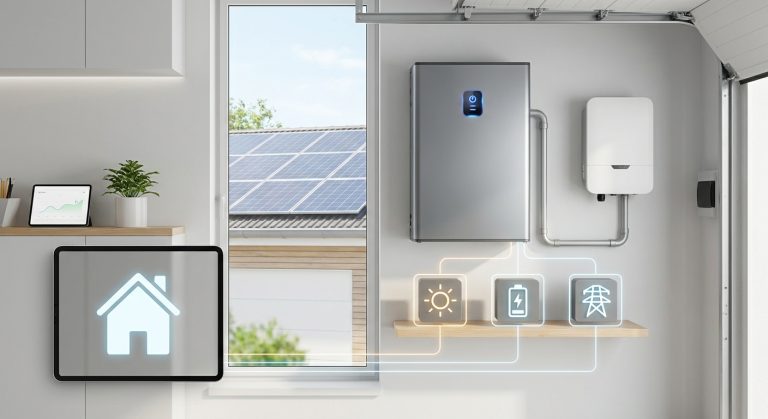
LiFePO4 (LFP) and sodium-ion batteries have different maturity levels, supply chains and operating characteristics. Neither chemistry is universally superior. LFP is currently the more established choice for many residential storage systems because compatible products, BMS platforms and inverter integrations are widely available. Sodium-ion is an emerging option that may offer advantages in selected temperature, power or supply-chain scenarios, but performance must be checked against the exact cell, pack, test conditions and certification scope. Graspmart evaluates the battery chemistry, BMS and inverter requirements against the specific project rather than relying on chemistry-level claims alone.
Evaluating the Core Chemistry Differences
When specifying batteries for an energy storage system, understanding the elemental differences between these two technologies is critical. Product-specific claims often blur the lines, but the baseline chemistries have clear tendencies.
Energy Density and Space Requirements
LiFePO4 batteries lead the market in volumetric energy density. A standard 51.2V LFP system packs more watt-hours into a smaller footprint, making it the practical default for residential basements and garages where space is at a premium. Sodium-ion cells, because sodium atoms are larger and heavier than lithium atoms, yield lower energy density. A sodium-ion battery bank requires more physical space to achieve the same capacity as its LFP counterpart.
Cycle Life and Long-Term Value
For daily cycling applications, mature LFP products are available with long cycle-life claims, but the published number is meaningful only when depth of discharge, charge/discharge rate, temperature, end-of-life threshold and warranty throughput are stated. Sodium-ion cycle performance varies substantially by cell design and supplier. Compare model-specific test reports and warranty terms rather than assuming one chemistry will always deliver a particular service life.
Environmental and Temperature Performance
Low-Temperature Operations
Low-temperature charging is a critical design constraint. Many LFP cells restrict charging below 0°C unless the pack includes validated heating and temperature-control logic. Some sodium-ion cell designs report better low-temperature capability, but usable capacity, charge acceptance and cycle life at a stated temperature are product-specific. For cold-climate projects, require the exact operating curves, BMS limits and test report for the proposed pack.
High-Temperature Tolerance and Fast Discharge
Both chemistries can be engineered for stationary-storage safety, but pack design, cell quality, thermal management, protection logic and certification matter as much as chemistry. Certain sodium-ion cells are designed for high-rate charge or discharge, while others are optimized differently. Confirm continuous current, pulse duration, temperature rise and cycle impact from model-specific data before selecting a pack for starting or peak-power duty.
System Integration, Voltage, and Supply Chain
Inverter Integration
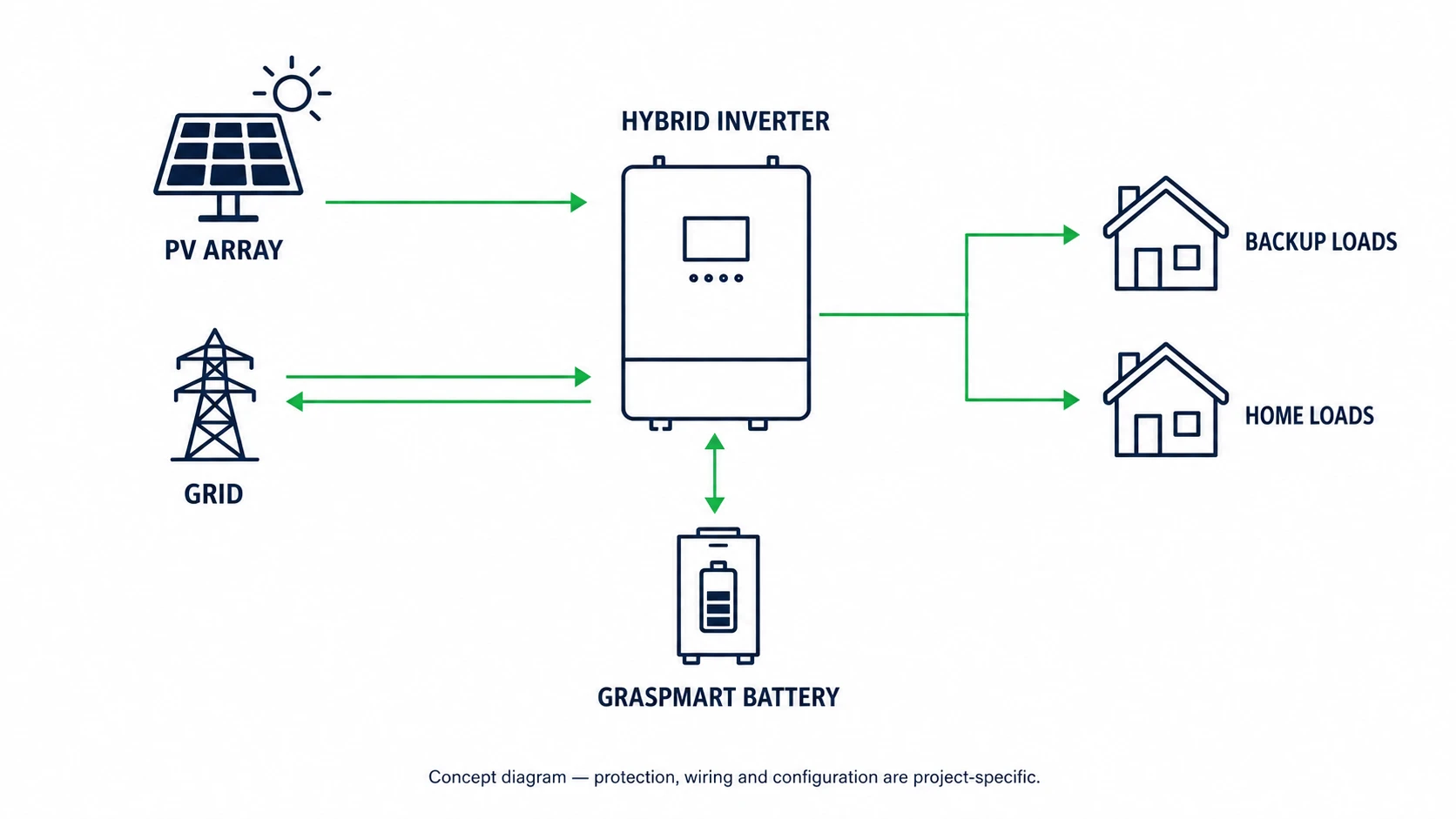
LFP currently has the broader residential integration ecosystem. Many 51.2 V systems offer CAN or RS485 communication, but compatibility is never guaranteed by connector type alone; verify the inverter model, firmware, protocol, cable pinout and current limits.
Supply Chain Stability
Sodium-ion technology can reduce dependence on lithium and cobalt and may use more abundant raw materials. Actual bill-of-materials exposure, cost and supply security still vary by cell design, production scale and supplier.
Voltage Characteristics
Sodium-ion operates across a wider voltage range during discharge compared to the flat voltage curve of LFP. This requires specialized inverter configurations and tailored BMS hardware.
Practical Applications: Where Each Technology Belongs
The final choice between LFP and sodium-ion heavily depends on your specific operational use case. Graspmart frequently helps system integrators evaluate these deployment scenarios.
- Residential Energy Storage Systems: LFP is currently the more widely supported option, with mature low-voltage products and established CAN/RS485 integrations. Confirm the exact inverter model, protocol, current limits and warranty before ordering.
- Commercial and Industrial Power: Space-constrained projects often favor mature LFP platforms. Sodium-ion may suit selected environments, but enclosure rating, thermal design, duty cycle and certification must be evaluated at product level.
- Starting and Motive Power: Some sodium-ion cells target high-power or low-temperature duty. Require pulse-current duration, temperature-rise data and cycle-life evidence before using them for starting or motive-power applications.
Decision Summary Matrix
Use this comparison table to guide your initial energy storage technology assessment.
Related project resources
Optimize Your Next Energy Storage Project
Whether you are evaluating a mature 51.2 V LFP platform or an emerging sodium-ion option, Graspmart can help structure the technical questions, supplier comparison and configuration review. Final suitability depends on validated model-specific data, documentation and commercial terms.