CAN and RS485 describe communication interfaces, not a universal battery language. A battery and inverter can share a connector type yet fail to exchange usable operating information.
Identify the protocol as well as the port
Ask which protocol profile is selected in the battery and inverter. Also record the complete model and firmware. Brand-level compatibility lists are useful for initial screening but do not establish that every model and revision will work.
Keep the cable specification
Obtain the pinout, cable part identification and termination instructions. Mark battery and inverter ends where they differ. A standard-looking RJ45 plug can conceal a nonstandard pin arrangement.
Verify the information exchanged
During commissioning, confirm that the inverter receives the intended battery status and limits. Record what happens if communication is interrupted. An apparently plausible SOC value alone does not verify every control function.
Details to confirm
- Battery and inverter protocol profiles
- Firmware versions
- Cable pinout and termination
- Communication-loss behavior
Which interface is better?
Choose the interface supported and verified for the exact equipment pair. The interface name alone does not determine system quality.
Product and project review
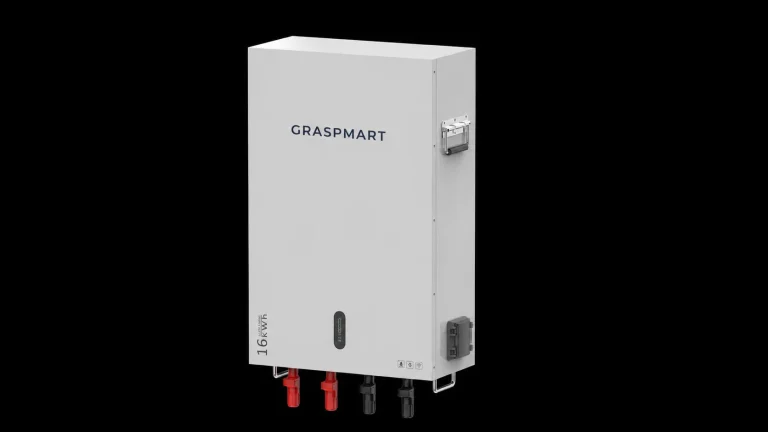
See the related Graspmart battery specifications and compare the available capacities. Use the reference data to shortlist a platform, then confirm the exact production model, accessories and operating limits in the quotation.
Send the inverter model, destination, quantity and the requirements listed above through the project enquiry form. Include existing equipment details when the battery is being added to an installed system.