A wide discharge-temperature range should not be read as permission to charge across that same range. For an unheated garage or seasonal site, the charging limit can be the decisive specification.
Read the separate ranges
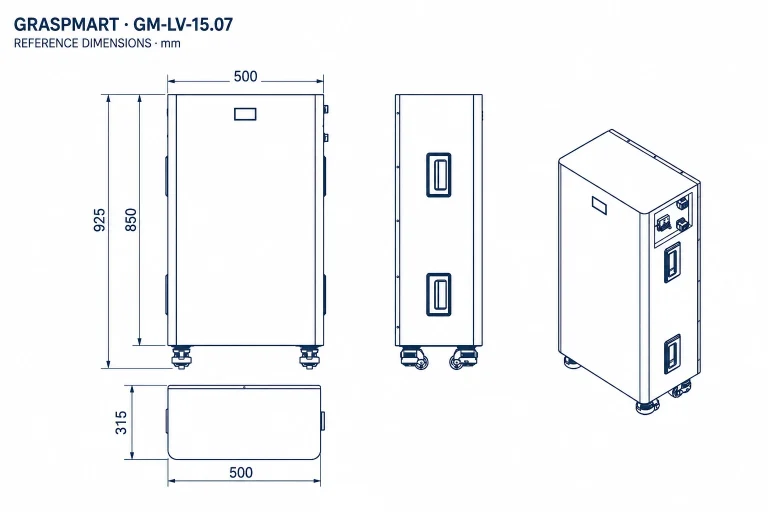
The supplied 314 Ah vertical-battery reference lists charging at 0–55°C and discharge at −20–65°C. These are reference limits for that platform; another battery can have different limits. Confirm what the BMS permits in the proposed configuration.
Consider the actual battery temperature
Outdoor air temperature, cabinet temperature and cell temperature are not always identical. The system should use the intended sensors and protection behavior. Do not defeat a temperature-related charge limit to restore charging.
Ask about supported heating
A heater must be part of an approved system with suitable control behavior. Ask about heater power, start conditions, power source and whether charging waits until an acceptable cell temperature is reached. Heating also consumes energy that must be allowed for in planning.
Details to confirm
- Charge range
- Discharge range
- Storage range
- Sensor, heater and low-temperature control
Does outdoor suitability mean cold-weather charging?
No. Weather protection and charging-temperature capability are separate requirements.
Product and project review
See the related Graspmart battery specifications and compare the available capacities. Use the reference data to shortlist a platform, then confirm the exact production model, accessories and operating limits in the quotation.
Send the inverter model, destination, quantity and the requirements listed above through the project enquiry form. Include existing equipment details when the battery is being added to an installed system.