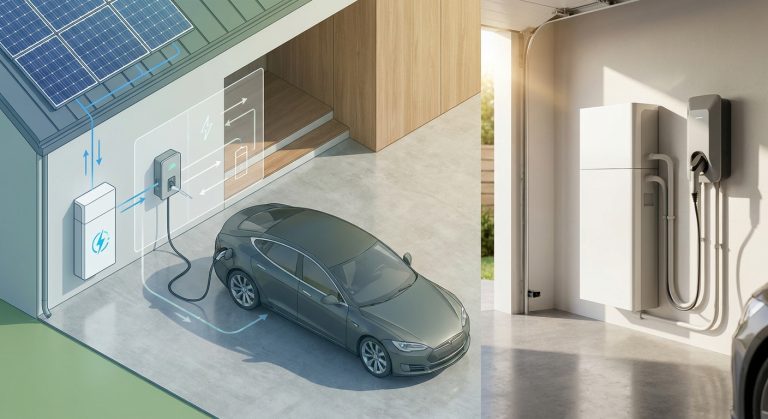
A battery sized from summer exports may spend winter partly empty. Winter planning needs both sides of the energy balance: what the home consumes and what the solar system can supply after daytime demand.
Use the relevant low-generation period
Review actual monthly or interval PV data where available. Consider shading and the shortest useful charging window. If measured data is unavailable, ask the system designer for a location-specific estimate and its assumptions.
Separate capacity from energy supply
Extra kWh helps carry stored energy across longer gaps only when energy is available to fill it. It cannot compensate indefinitely for a daily generation deficit. Off-grid designs need an explicit strategy for extended poor weather.
Include temperature in the equipment review
The selected battery’s charging temperature range matters in an unheated location. A product being able to discharge at a low temperature does not establish that it can charge at the same temperature. Confirm the actual pack and any supported heating arrangement.
What to record before selecting a battery
- Winter generation and daytime load
- Overnight and heating demand
- Longest intended autonomy period
- Charging temperature and alternate recharge
Should I buy the biggest battery for winter?
Compare the additional usable energy with realistic recharge opportunities and outage needs. More capacity alone does not resolve insufficient generation.
Compare the relevant battery
Review the corresponding Graspmart battery specifications alongside the capacity comparison. The product page gives the reference electrical platform; the quotation confirms the supplied model and configuration.
For a useful recommendation, include your delivery country, inverter model, supported loads, backup hours and quantity in the project enquiry. This allows energy, power and installation requirements to be checked together.