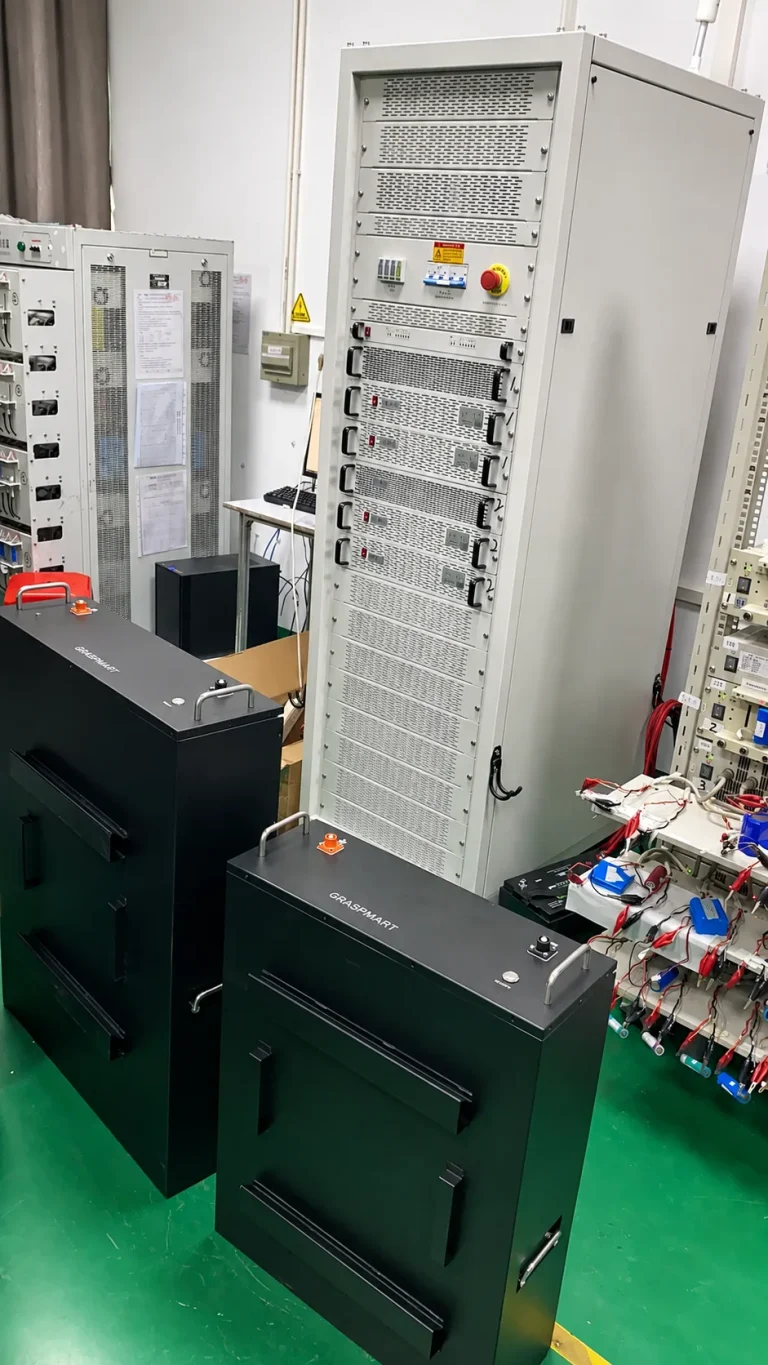
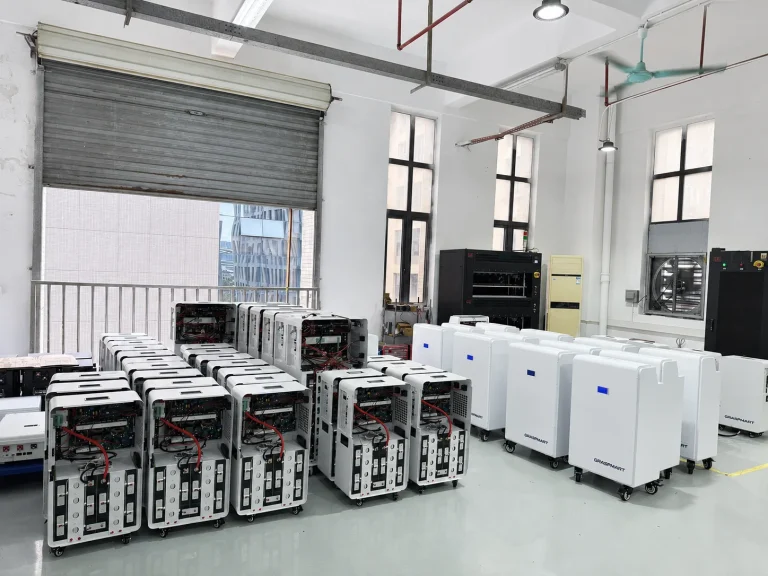
Wall-mounted and floor-standing LiFePO4 batteries can use similar cells and nominal capacities, but they create different requirements for installation, service access, packaging and future expansion. The right enclosure is therefore a project decision—not only a visual preference.
Quick comparison
| Decision point | Wall-mounted battery | Floor-standing battery |
|---|---|---|
| Typical project priority | Compact footprint and clean installation | Higher single-unit capacity and easier floor loading |
| Site requirement | Verified wall structure and mounting hardware | Level floor and anti-tip arrangement where required |
| Handling | Lifting and alignment during fixing | Moving, positioning and access path |
| Service access | Clearance around a fixed enclosure | Front, side or rear access according to design |
| Expansion | Additional wall area or parallel units | Additional floor area or modular cabinet layout |
When a wall-mounted battery makes sense
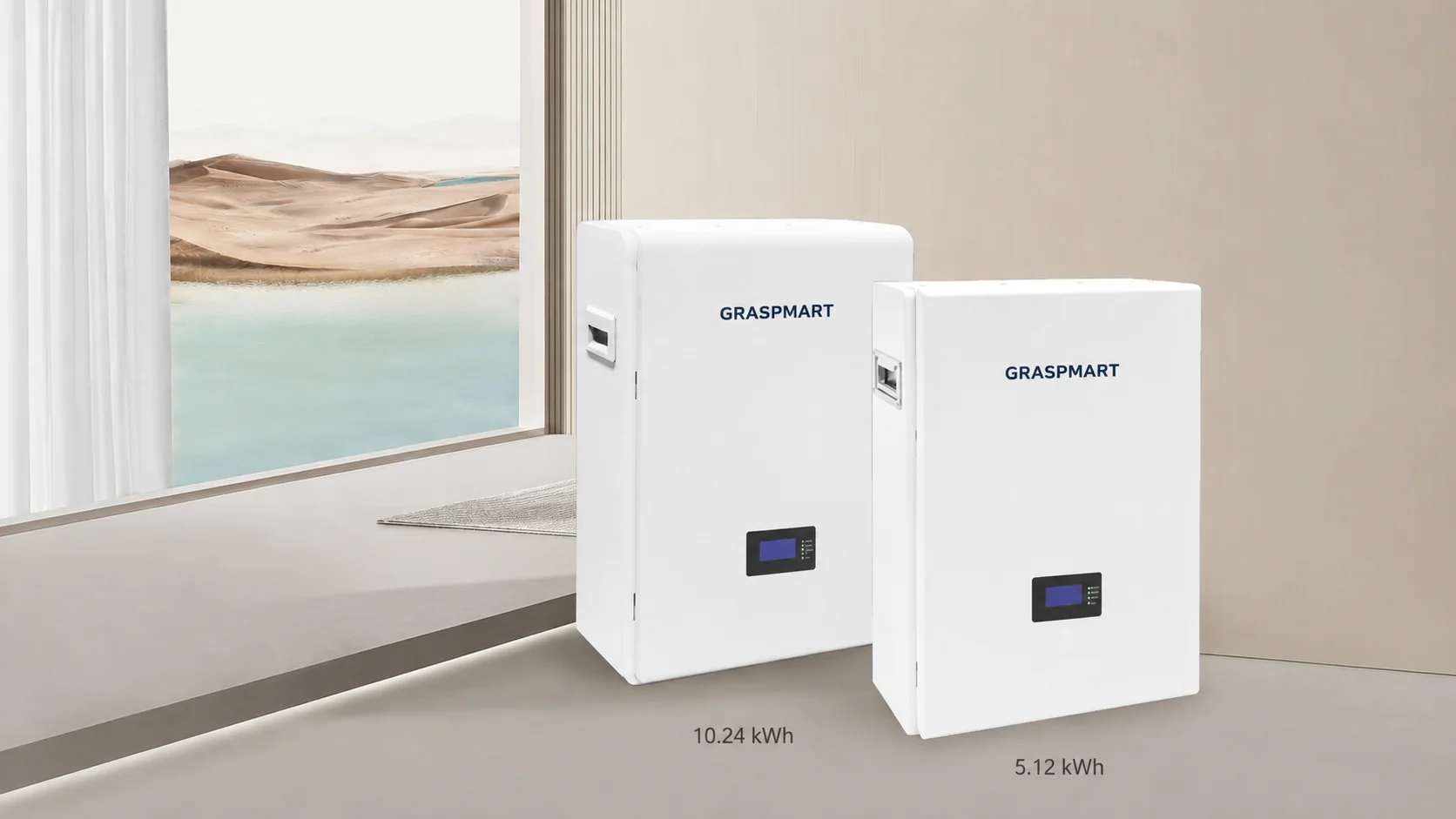
A wall-mounted unit is often suitable for a utility room, garage or protected indoor installation where floor space is limited. It can keep the battery away from minor floor moisture and make cable routing orderly. However, the installer must verify the wall material, fasteners, bracket, battery weight, access route and required clearances.
Do not assume that any masonry or framed wall can carry the equipment. The installation manual and local building practice should determine the fixing method. If the battery is heavy, mechanical lifting or a two-person procedure may be necessary.
When a floor-standing battery is the better choice
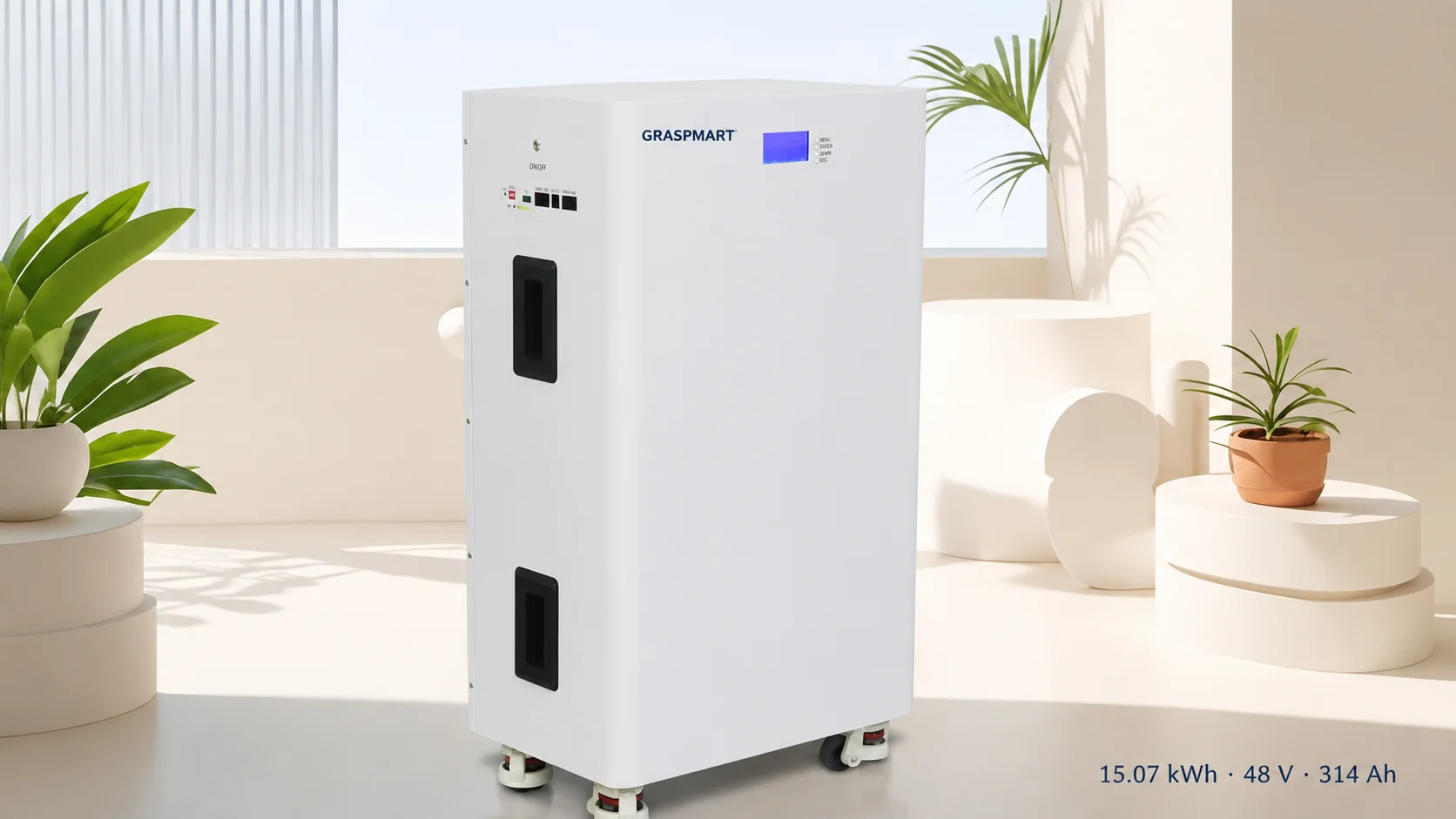
Floor-standing enclosures are useful when the battery has a larger single-unit capacity or when wall loading is uncertain. They may also simplify service access and future replacement. The floor still needs adequate load capacity, a level surface and protection from water, impact and unauthorized access.
Compare the electrical design separately
Enclosure style does not establish electrical compatibility. Confirm nominal voltage, operating-voltage range, rated capacity, usable energy, continuous current, peak-current conditions, terminal arrangement and protection devices. A battery with more kWh may extend runtime without increasing the power available to start large loads.
For low-voltage systems, also confirm whether the project uses a 48 V-class or 51.2 V architecture. The inverter battery window, charge settings and communication protocol must match the selected battery.
Check CAN or RS485 communication
A CAN or RS485 connector does not guarantee communication. Record the battery model, inverter model, firmware, protocol name, cable pinout, address settings and maximum supported parallel quantity. If closed-loop communication is required, request written confirmation for the exact combination.
Use the Graspmart inverter compatibility review before confirming an order.
Installation and logistics checklist
- Net weight, packed weight and package dimensions
- Door, stair, corridor and lifting restrictions
- Wall structure or floor loading
- Indoor/outdoor location and required enclosure rating
- Operating and storage temperature limits
- Cable entry direction, terminal access and isolation device
- Ventilation and service clearances from the manual
- Protection from water, direct sun, heat sources and impact
- Required mounting brackets, wheels, feet or anti-tip hardware
- Space for future parallel expansion
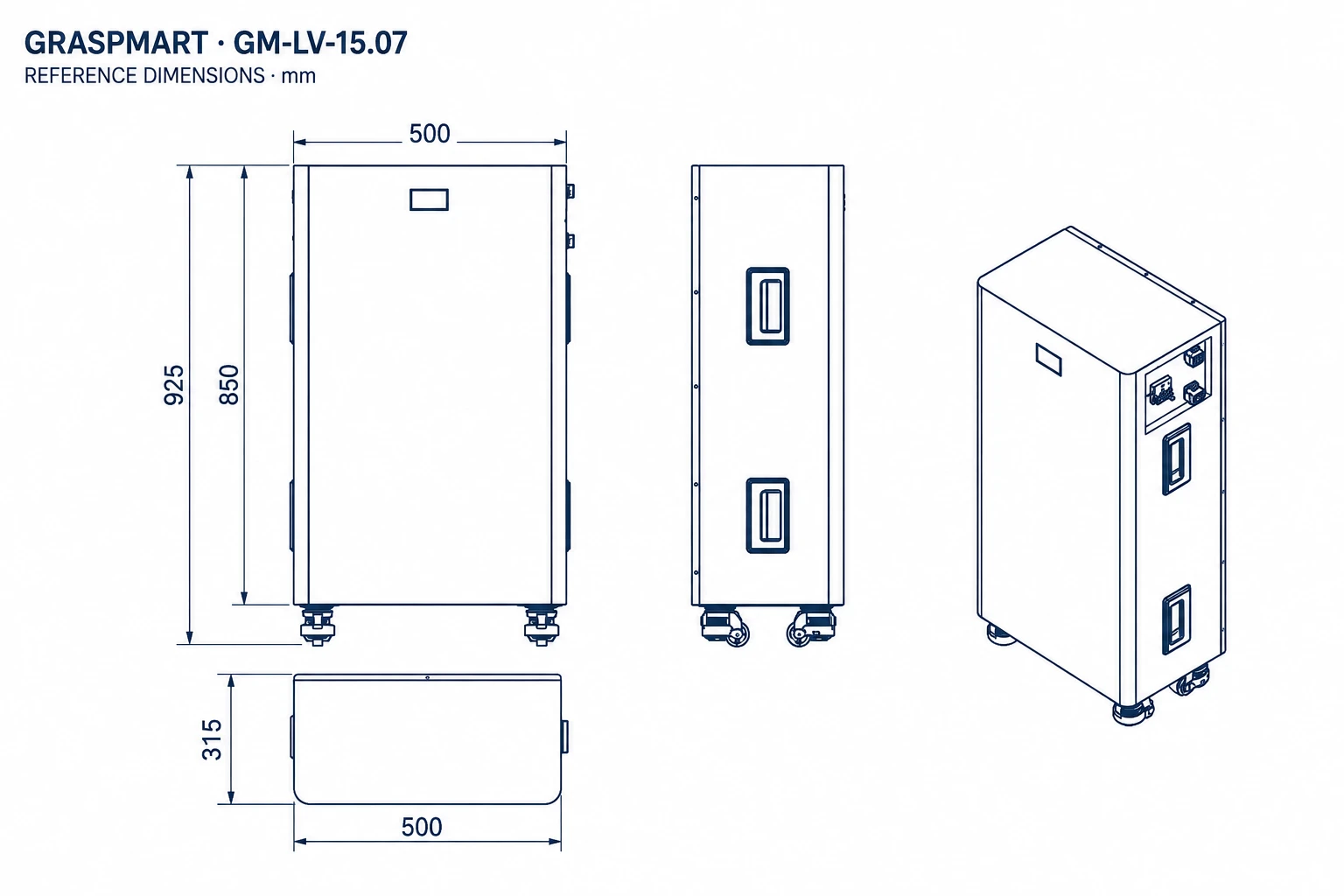
Questions distributors should add to the RFQ
Ask the supplier to identify the exact model, enclosure style, capacity, BMS, communication method, accessories, packaging, warranty scope and model-specific documents. If private labeling is required, define the logo position, rating label, carton artwork, manual language and sample-approval process.
Frequently asked questions
Is a wall-mounted battery always smaller?
No. Enclosure style and energy capacity are related design choices, but they are not the same specification. Compare the exact dimensions, weight and rated energy.
Can a floor-standing battery be placed outdoors?
Only when the exact enclosure rating, environmental limits and installation instructions allow it. A product photograph is not evidence of outdoor suitability.
Can wall-mounted and floor-standing batteries be connected in parallel?
Only when the manufacturer approves the exact models, firmware, BMS configuration and parallel method. Similar voltage labels are not sufficient.
Next step
Compare the Graspmart residential battery range, including 10.24 kWh and 15–16 kWh configurations. For a project recommendation, send the inverter model, location, installation type, quantity and required documents through the RFQ form.