A datasheet is most useful when read as a set of linked limits. The headline capacity describes only one part of the battery; operating conditions and test definitions determine what the numbers mean for a project.
Separate cell and pack specifications
A cell’s allowable current is not automatically the finished pack’s allowable current. Pack limits also depend on BMS, connectors, conductors and temperature control. Use the battery-pack specification when selecting an inverter.
Identify recommended and maximum values
Recommended current, maximum continuous current and short pulse current are different ratings. A pulse value needs a duration. Temperature ranges may differ for charging, discharge and storage. Avoid collapsing them into one broad operating claim.
Check the revision and contradictions
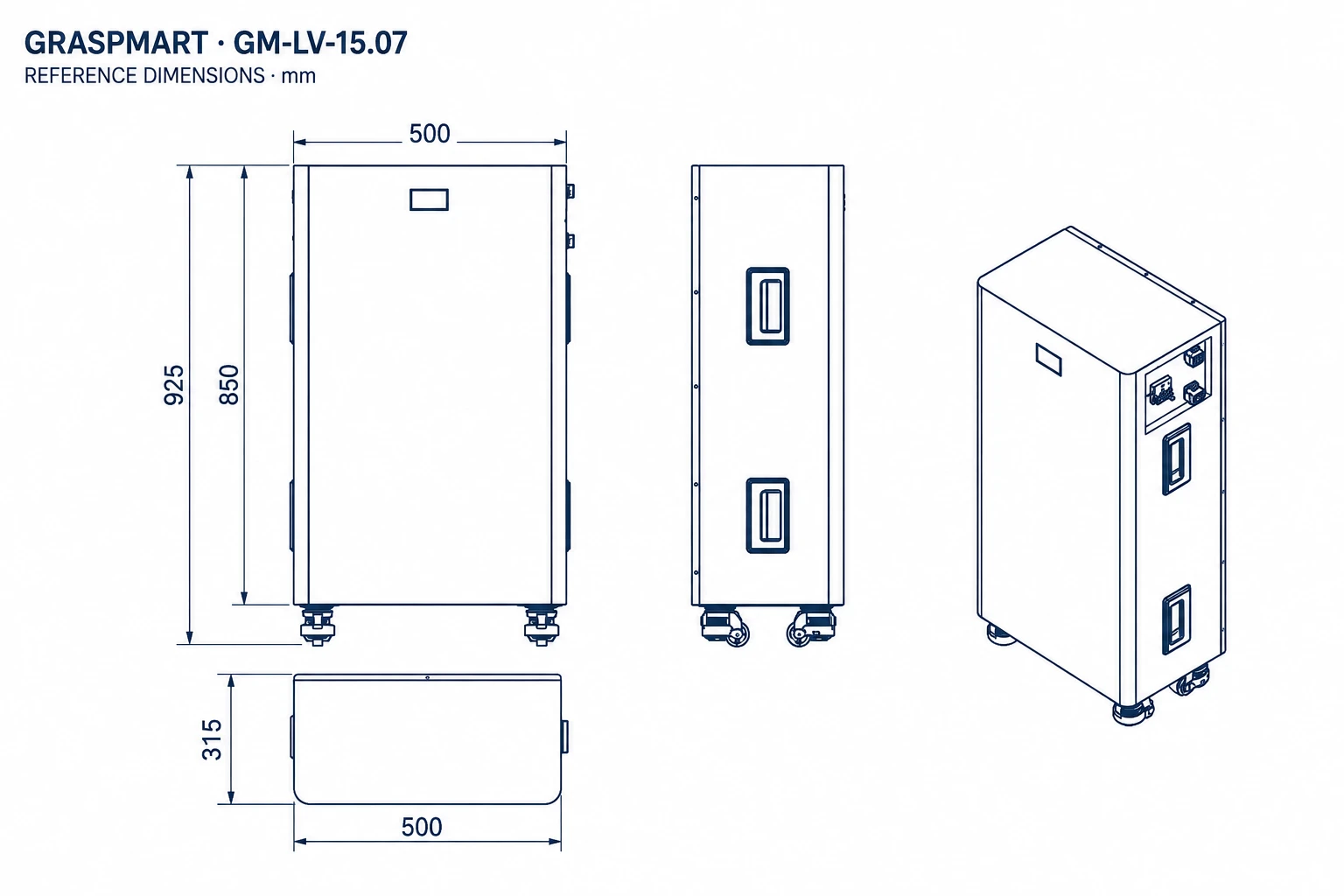
Record the model and document revision. If a drawing caption lists a different capacity or a table conflicts with the manual, request written clarification. Do not resolve the conflict by selecting whichever number makes the product appear stronger.
Details to confirm
- Pack rather than cell ratings
- Recommended versus maximum values
- Test temperature, rate and end condition
- Revision and model match
Is every number in a brochure a warranty term?
No. Warranty coverage and acceptance criteria should be defined in the commercial documents for the order.
Product and project review
See the related Graspmart battery specifications and compare the available capacities. Use the reference data to shortlist a platform, then confirm the exact production model, accessories and operating limits in the quotation.
Send the inverter model, destination, quantity and the requirements listed above through the project enquiry form. Include existing equipment details when the battery is being added to an installed system.