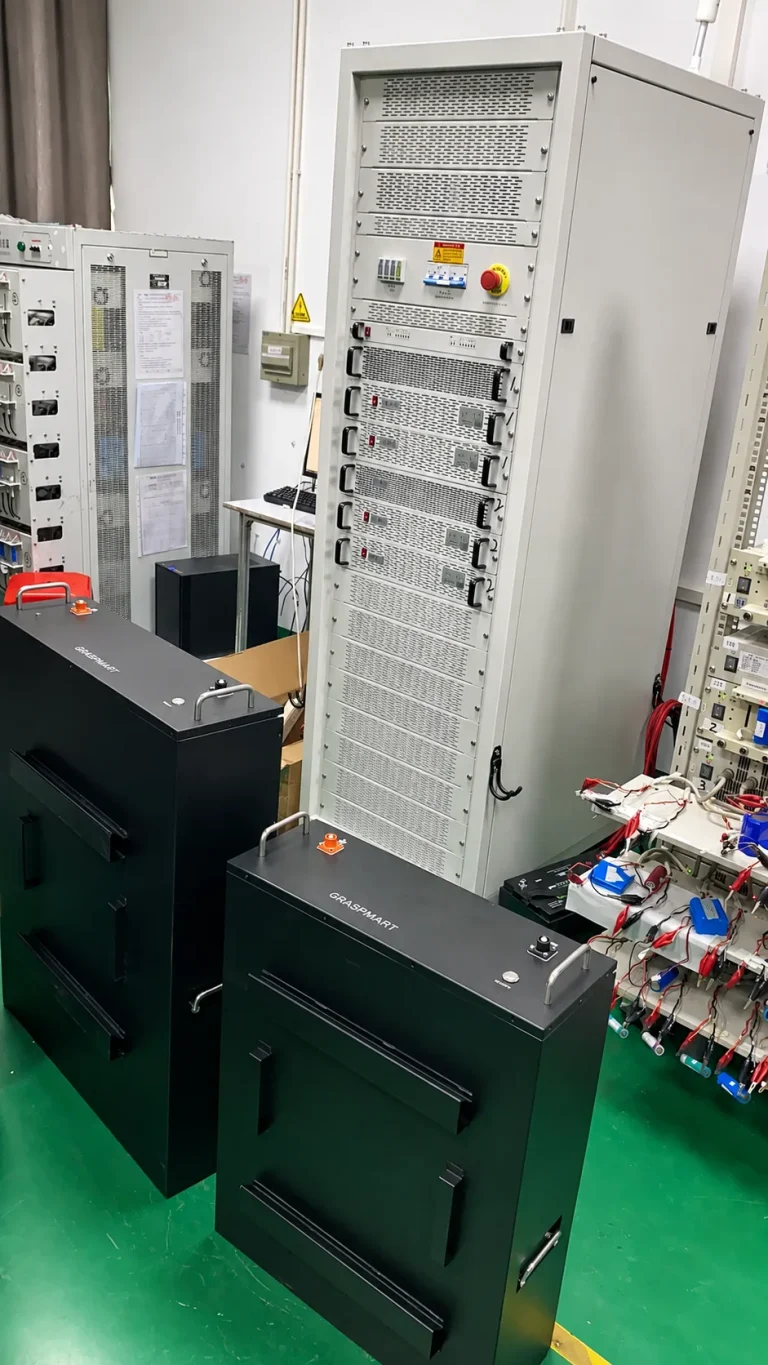
Two quotations labelled 20 kWh may describe different amounts of energy available to the customer. Establish whether each figure is nominal DC energy, permitted battery discharge energy or energy measured at the AC output.
Start with the rating
A 51.2 V, 400 Ah reference pack has 20.48 kWh nominal energy. The calculation is voltage multiplied by capacity divided by 1,000. It does not account for operating reserve, inverter losses or the load profile.
Compare identical operating windows
If an example system uses 80% of nominal energy and converts it at an assumed 90% efficiency, the AC estimate is 14.75 kWh. At a 90% window with the same assumed efficiency, it is 16.59 kWh. Neither assumption is a product guarantee.
Ask where energy is measured
A battery discharge test and an AC system test have different boundaries. A meaningful comparison states temperature, charge/discharge rate, starting and ending SOC, equipment and battery age. Ask whether standby loads were included.
What to record before selecting a battery
- Nominal energy and Ah rating
- Minimum and maximum operating SOC
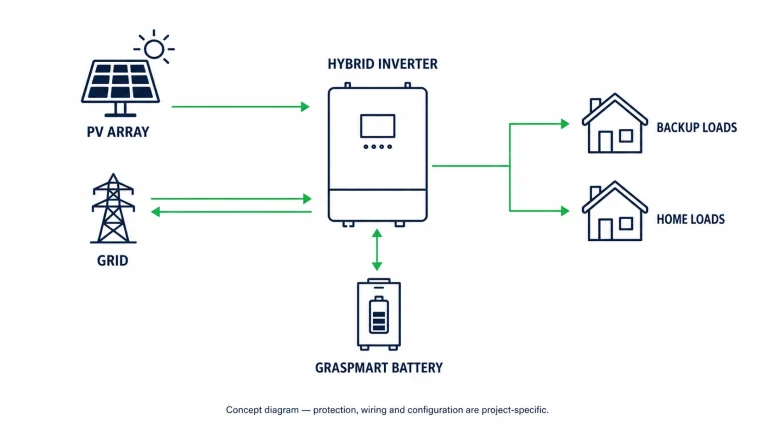
- Measurement boundary: DC battery or AC output
- Test conditions and warranted capacity
Can I use the full nominal capacity?
Use the operating limits in the selected model’s manual. A nominal rating does not authorize discharging beyond the approved cutoff.
Compare the relevant battery
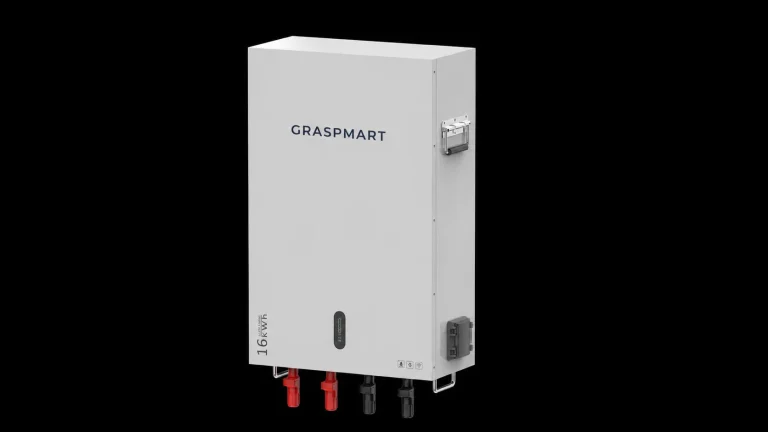
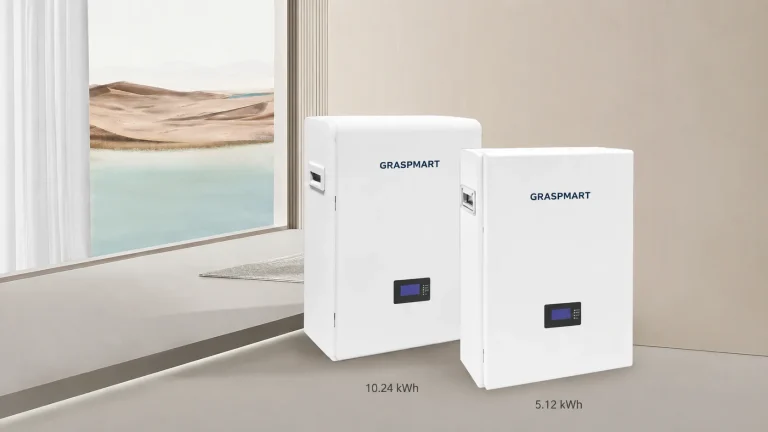
Review the corresponding Graspmart battery specifications alongside the capacity comparison. The product page gives the reference electrical platform; the quotation confirms the supplied model and configuration.
For a useful recommendation, include your delivery country, inverter model, supported loads, backup hours and quantity in the project enquiry. This allows energy, power and installation requirements to be checked together.