A 10 kWh battery can store enough energy for an evening and still be unable to start every appliance in the house. Energy capacity and power output answer different questions. Read both before comparing quotations.
Calculate runtime from energy
A 1 kW average load operating for four hours consumes 4 kWh. A 2 kW load over the same period consumes 8 kWh. Divide usable AC energy by average load to estimate runtime. Nominal battery energy must first be adjusted for the permitted operating window, conversion losses and any reserve.
Calculate output from voltage and current
At nominal 51.2 V, 100 A corresponds to 5.12 kW DC. This is arithmetic, not a guaranteed AC output rating. The inverter, BMS, temperature and state of charge can reduce available power. Check the discharge-current rating and its duration.
Check the appliance that changes the decision
A kettle used briefly may consume little daily energy but create a high simultaneous load. Heating used for hours can dominate both power and energy. Motor starting adds another requirement: the surge magnitude and duration must fit the complete system.
What to record before selecting a battery
- Usable energy at the intended reserve
- Continuous AC inverter output
- Battery continuous and peak current
- Motor starting demand and duration
Does doubling kWh double output?
Only if the approved battery arrangement, inverter and electrical installation also support the higher power. More energy alone extends runtime.
Compare the relevant battery
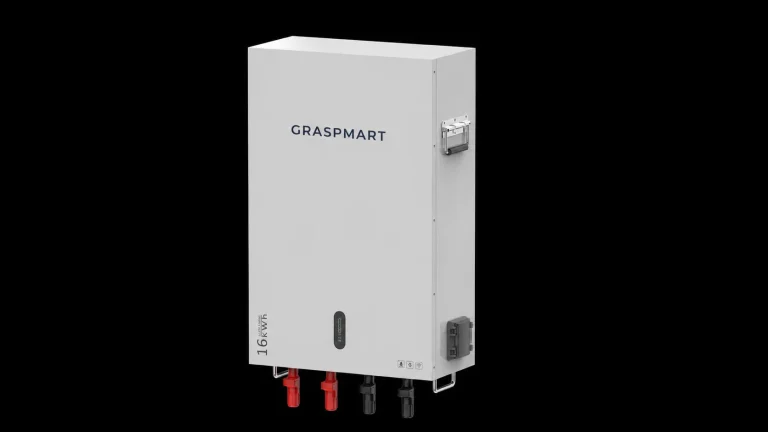
Review the corresponding Graspmart battery specifications alongside the capacity comparison. The product page gives the reference electrical platform; the quotation confirms the supplied model and configuration.
For a useful recommendation, include your delivery country, inverter model, supported loads, backup hours and quantity in the project enquiry. This allows energy, power and installation requirements to be checked together.