Choosing between a 5, 10 and 15 kWh home battery starts with the electricity you want to supply when solar production is low or the grid is unavailable. Battery capacity affects runtime. Inverter output and battery current limits affect how many appliances can operate at once.
Start with the loads
List the appliances that must remain powered and record their running watts. Refrigerators, pumps and air conditioners may have higher starting demand. Add the running load, then multiply it by the required hours.
Required AC energy = average supported load in kW × backup hours. A home needing 1.5 kW for six hours requires 9 kWh at the AC loads. The battery must provide more because a reserve may be retained and the inverter uses energy during conversion.
Illustrative runtime comparison
| Nominal battery | Approx. AC energy* | 1 kW load | 2 kW load |
|---|---|---|---|
| 5.12 kWh | 4.15 kWh | 4.1 h | 2.1 h |
| 10.24 kWh | 8.29 kWh | 8.3 h | 4.1 h |
| 15.07 kWh | 12.21 kWh | 12.2 h | 6.1 h |
| 16.08 kWh | 13.02 kWh | 13.0 h | 6.5 h |
*Planning example using a 90% operating window and 90% conversion efficiency. These are assumptions, not product guarantees. Temperature, age, standby use and changing loads affect runtime.
5 kWh: essential circuits and small homes
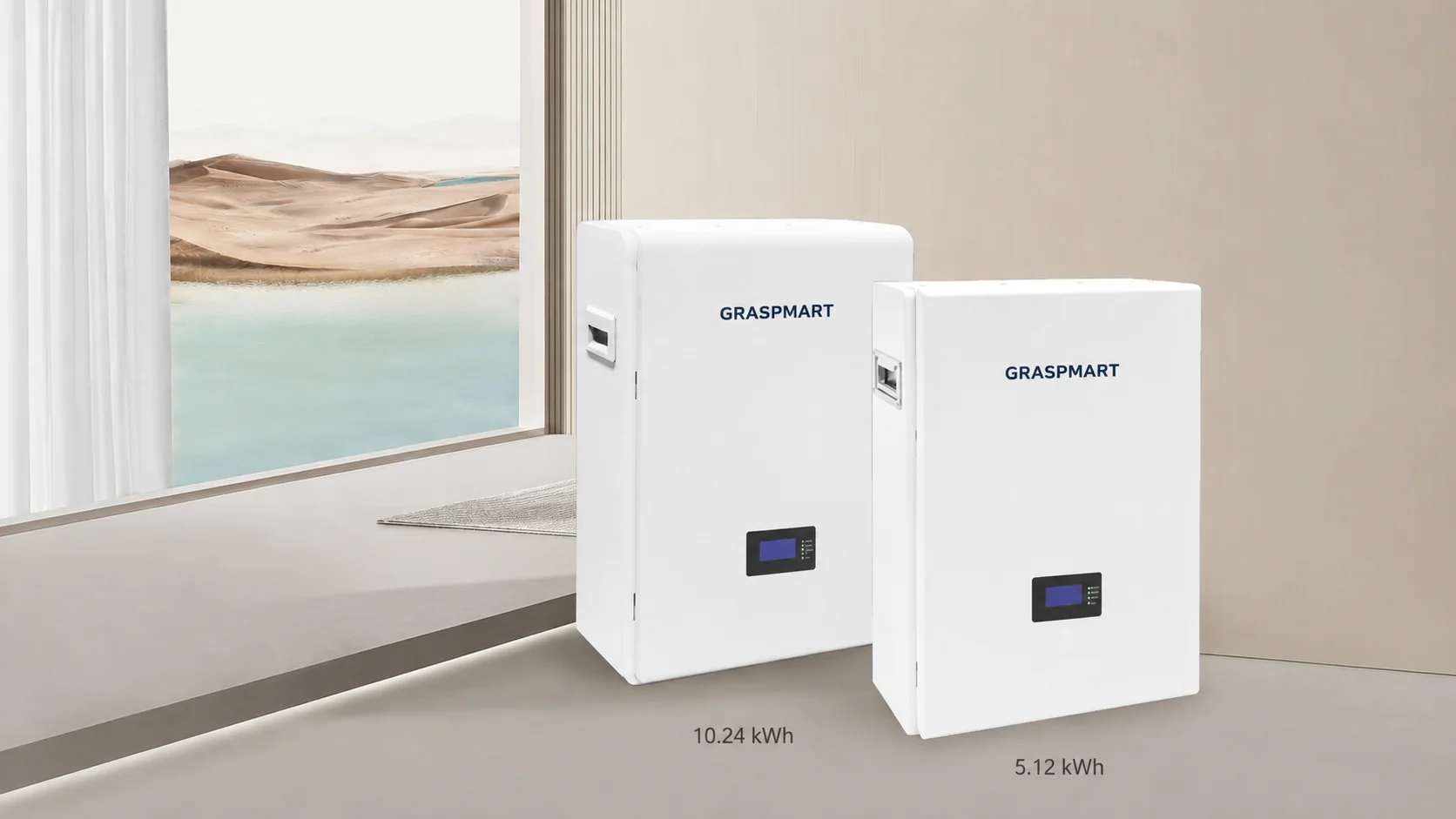
A 5.12 kWh battery can suit lighting, internet equipment, refrigeration and device charging. It is less suitable when electric cooking, water heating, large pumps or air conditioning must run for long periods.
10 kWh: more evening energy
A 10.24 kWh battery offers longer essential-load backup and more capacity for evening solar use. Check the battery current and inverter output separately; 10 kWh of stored energy does not mean 10 kW of continuous power.
Review the 10.24 kWh battery.
15 or 16 kWh: longer backup
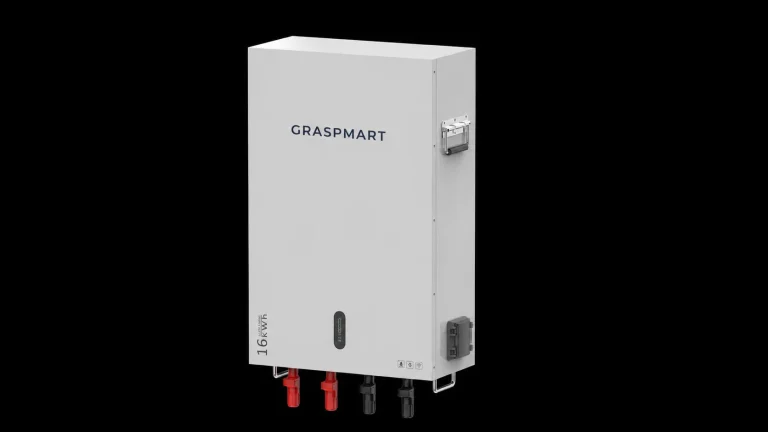
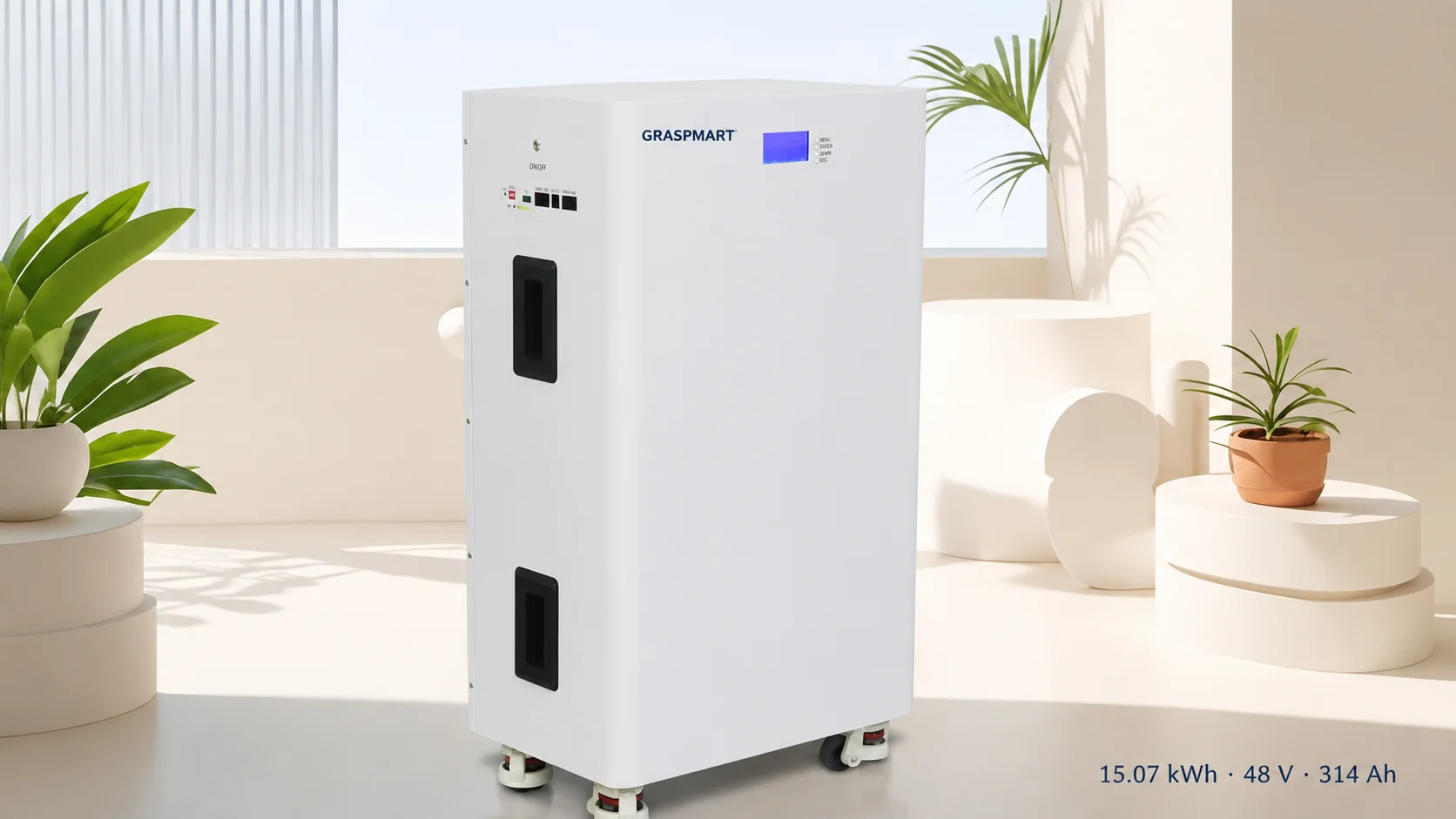
Graspmart lists a 15.07 kWh 48 V model and a 16.08 kWh 51.2 V model. They use different voltage limits and must be matched to the inverter.
Compare the 15.07 and 16.08 kWh batteries.
Check solar recharge and peak power
Compare energy used overnight with surplus PV generation, especially in winter. Separately check the highest simultaneous load and motor starting power. A larger battery extends runtime but does not automatically increase inverter output.
Before requesting a price
- Delivery country and quantity
- Daily and overnight consumption
- Essential loads and backup hours
- PV size and exact inverter model
- Installation location and expansion plan
- Required documents and accessories