A 10 kWh battery does not have one fixed “house runtime.” The answer depends on usable battery energy, inverter losses, the appliances operating and the reserve retained for battery protection or future outages.
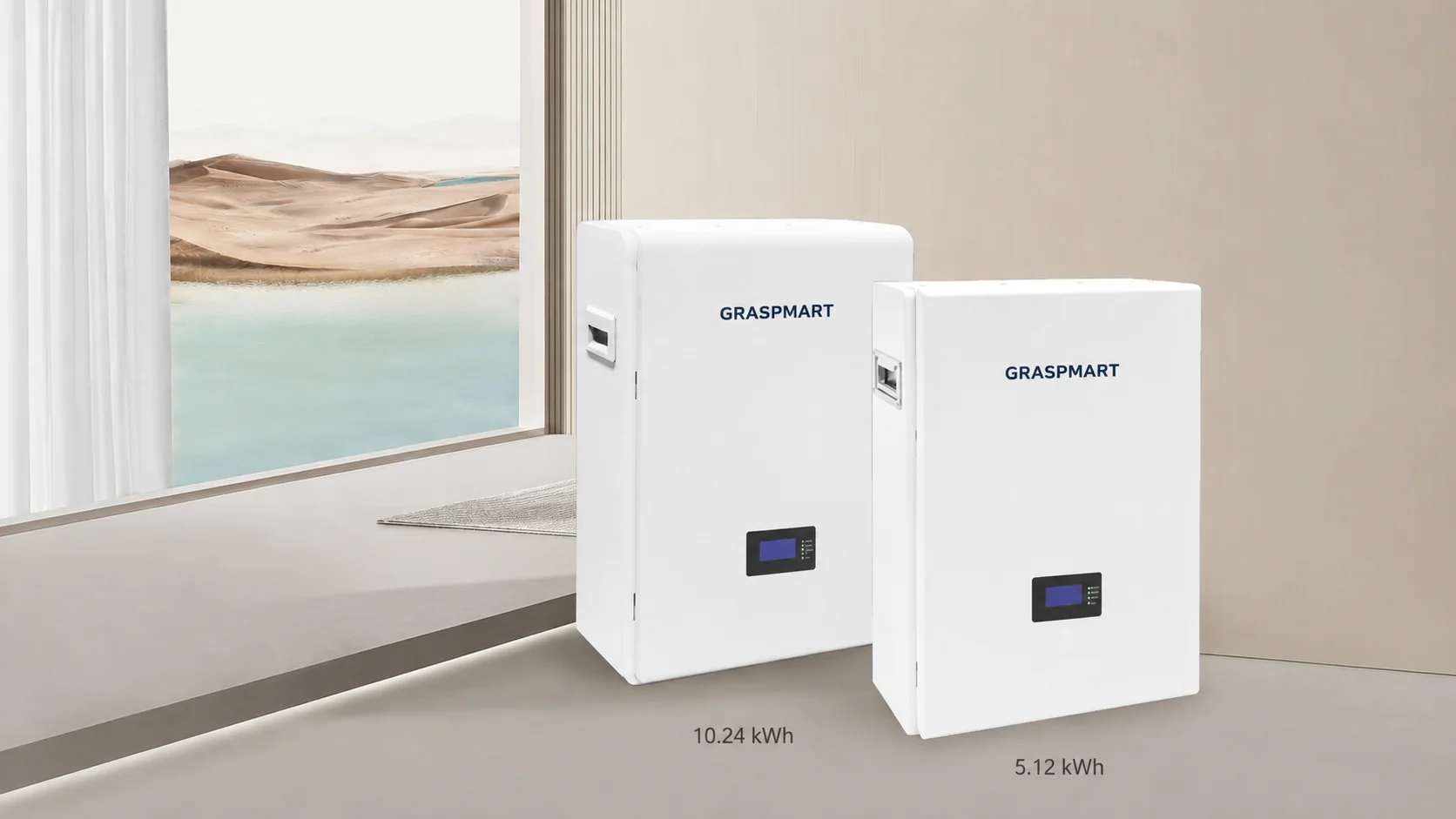
Convert nominal energy to usable AC energy
A simple planning calculation is:
Usable AC energy = nominal battery energy × operating window × inverter efficiency.
Using a 10.24 kWh battery, a 90% operating window and 90% conversion efficiency gives about 8.29 kWh at the AC loads. The percentages are examples. Use the quoted battery and inverter data for the project.
Illustrative runtime by average load
| Average load | Estimated runtime from 8.29 kWh |
|---|---|
| 0.5 kW | 16.6 hours |
| 1 kW | 8.3 hours |
| 2 kW | 4.1 hours |
| 3 kW | 2.8 hours |
Real household demand changes minute by minute. Heating, cooling, cooking, pumps and water heating can reduce runtime quickly.
Example essential-load plan
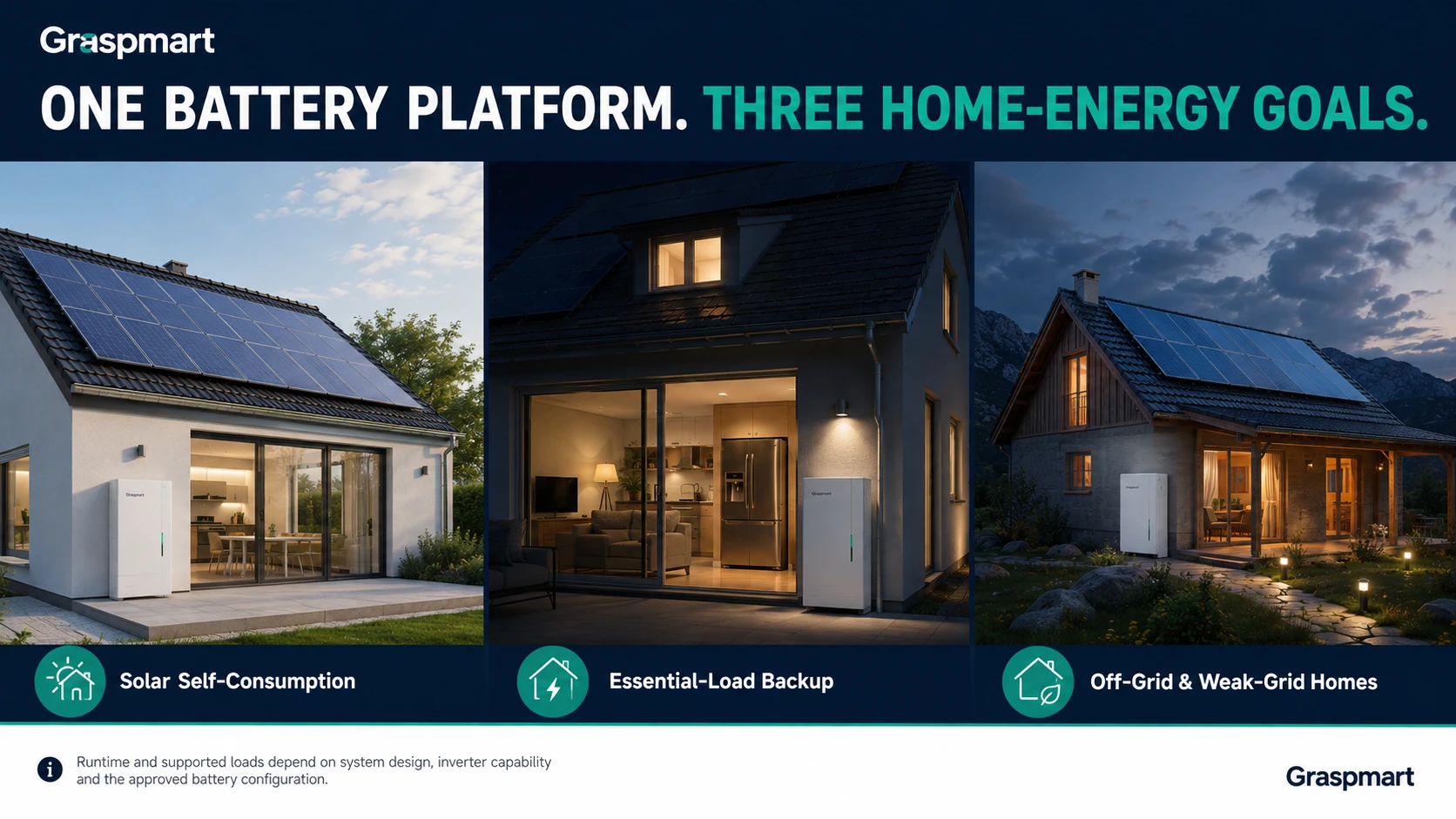
A refrigerator, router, several LED lights and small electronics may average well below 1 kW, although the refrigerator compressor has a brief starting surge. A 10 kWh battery can therefore run these selected loads much longer than it can run an entire home with electric cooking, water heating or air conditioning.
Energy and power are different
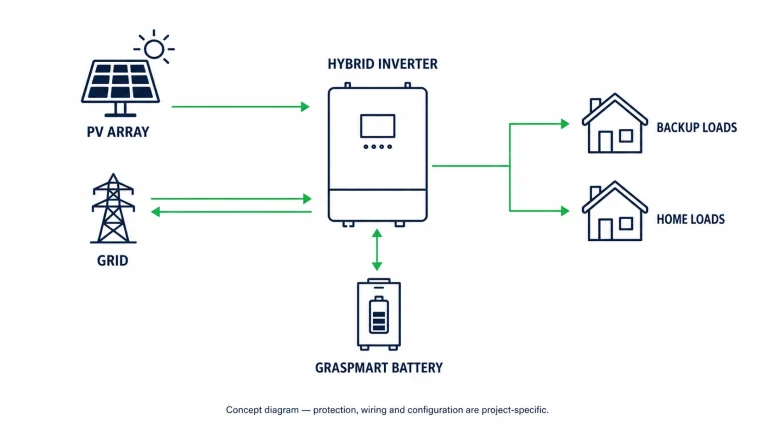
The battery may contain enough energy for several hours while the inverter or battery current limit prevents a high-power appliance from starting. Check continuous inverter output, surge capability, battery discharge current, cable size and protection devices.
Solar recharge affects the next day
For daily cycling, the PV array must produce enough surplus energy to recharge the battery after supplying daytime loads. Compare winter production and household consumption, not only the array nameplate rating.
What changes runtime
- Battery operating state-of-charge window
- Inverter efficiency and standby consumption
- Battery temperature and age
- Changing appliance loads and motor starts
- Backup reserve and generator or grid charging
Check the selected 10 kWh model
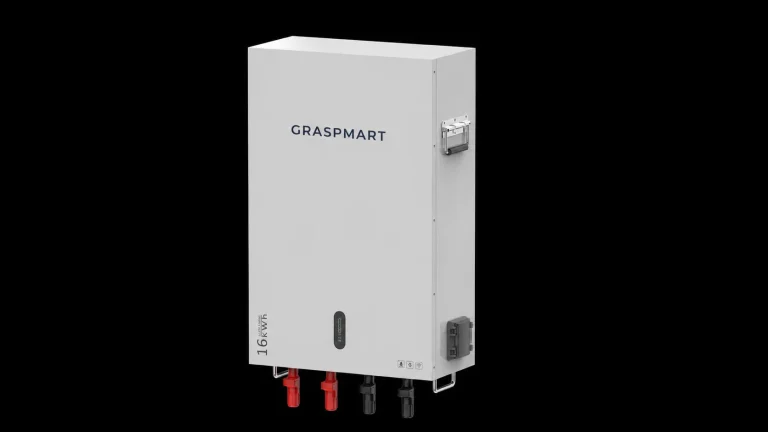
Review the Graspmart 10.24 kWh battery page and confirm the inverter through the compatibility process.
Send your load list, inverter model, delivery country and quantity through the quotation form.