Customers sometimes add battery capacity after an appliance trips the inverter, then find the problem unchanged. The limiting component may be inverter output, a battery current setting or a short starting surge rather than stored energy.
Identify the symptom
Record whether the system stops immediately at appliance start, after several minutes, or near low SOC. These patterns point to different checks. Keep the inverter alarm and battery alarm separately; one device may be responding to the other.
Compare limits through the full path
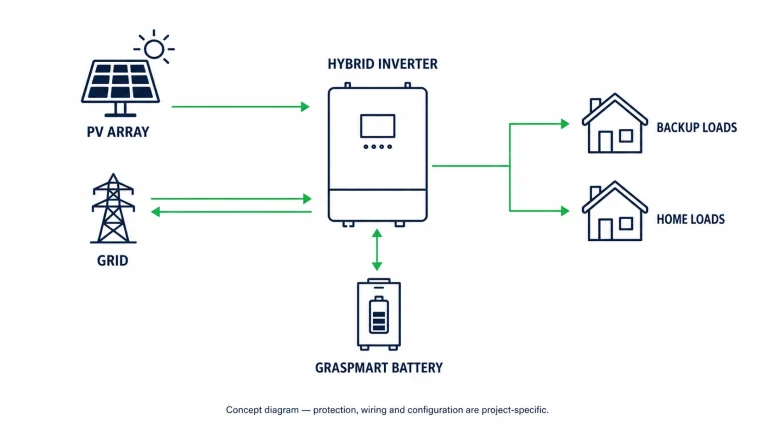
The supported AC load depends on battery discharge capability, inverter rating, voltage under load, cables and protection. For a constant power load, lower DC voltage means higher current. Nominal-voltage arithmetic alone can understate the demanding condition.
Choose the appropriate remedy
A runtime shortage may justify more approved capacity. A power shortage may require a different inverter or a revised load plan. A connection or setting fault requires correction, not more battery energy. Have the installer assess the complete configuration.
What to record before selecting a battery
- Alarm timestamp and code
- Appliance running and starting power
- SOC and temperature at the event
- Inverter and BMS current settings
Will two batteries solve a starting problem?
Only if their parallel arrangement is approved and the inverter and installation can deliver the required surge.
Compare the relevant battery
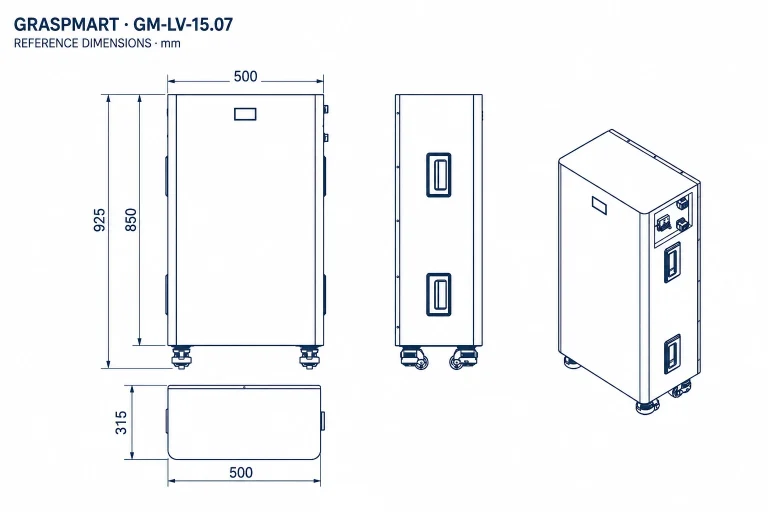
Review the corresponding Graspmart battery specifications alongside the capacity comparison. The product page gives the reference electrical platform; the quotation confirms the supplied model and configuration.
For a useful recommendation, include your delivery country, inverter model, supported loads, backup hours and quantity in the project enquiry. This allows energy, power and installation requirements to be checked together.