COMPACT HOME STORAGE
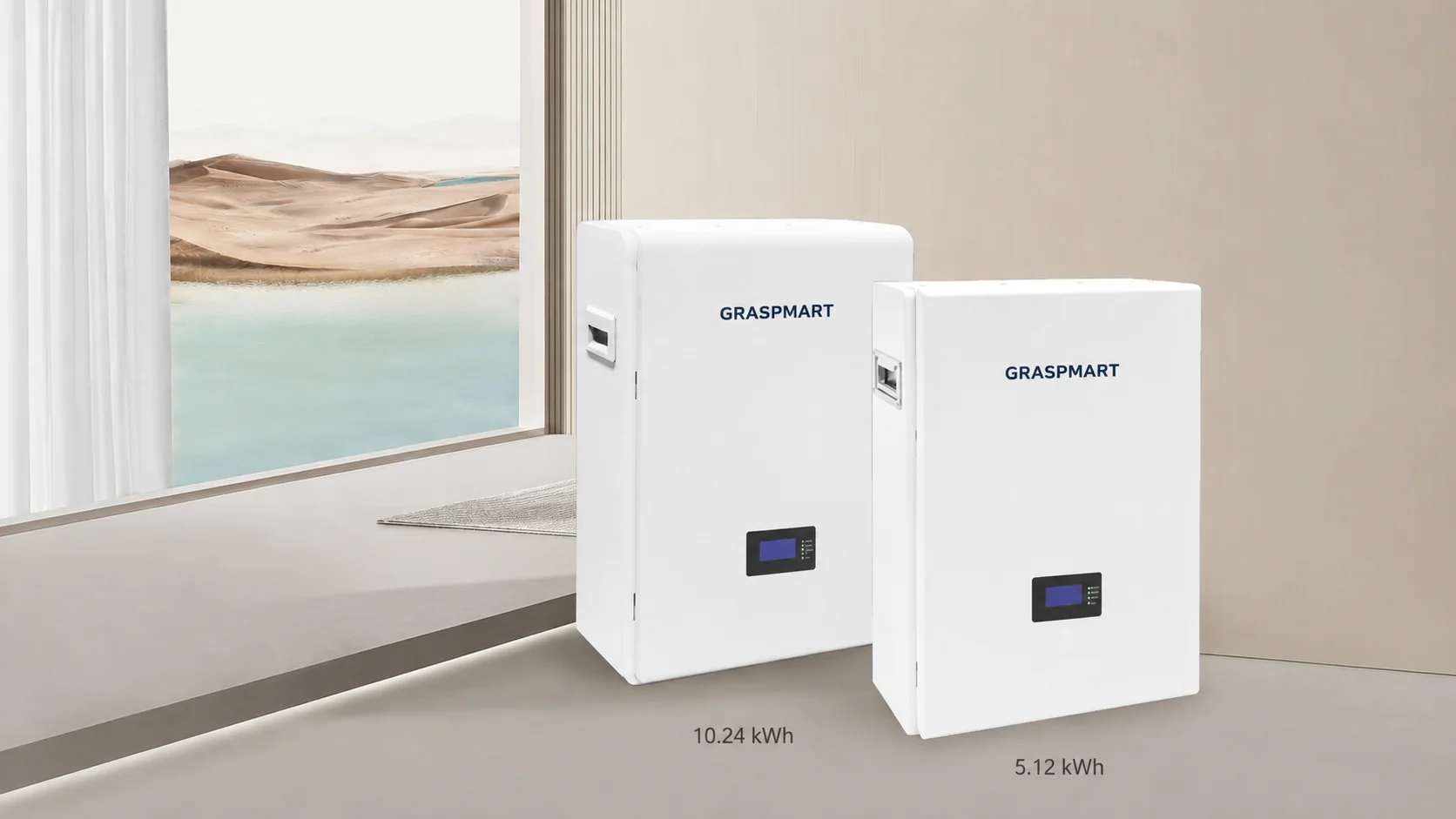
10.24 kWh · 51.2 V · 200 Ah LiFePO4 battery
A low-voltage residential battery platform for solar self-consumption, essential-load backup and daily cycling. Final electrical limits, enclosure, certification and inverter protocol are confirmed against the selected configuration before quotation.
PROJECT FIT
Start with the home and inverter—not capacity alone.
Best suited to
Moderate household loads, solar self-consumption and selected backup circuits.
Electrical platform
51.2 V nominal, 200 Ah, 10.24 kWh. CAN/RS485 support depends on the approved BMS configuration.
Before ordering
Confirm inverter brand and exact model, required power, installation location, target market and certification.
What your quotation should confirm
- Exact model code and battery configuration
- Continuous and peak charge/discharge current
- Usable energy and depth-of-discharge condition
- Cycle-life test condition and warranty terms
- Dimensions, weight, enclosure rating and temperature range
- Inverter communication protocol, cable and firmware
- Certificates and transport documents for the destination market
Send us the inverter and backup goal.
We will return the questions needed to validate the configuration before a commercial offer.
How much backup can 10.24 kWh provide?
At an illustrative 90% usable SOC window and 90% conversion efficiency, 10.24 kWh corresponds to approximately 8.29 kWh at the AC load. Estimated constant-load runtime is 8.3 hours at 1 kW, 4.1 hours at 2 kW and 2.8 hours at 3 kW. These percentages are planning assumptions, not product performance guarantees.
When to select the next capacity
Choose a larger platform when overnight consumption exceeds the usable energy, when longer outage coverage is needed, or when the inverter requires more battery current. Compare 15/16 kWh and 20 kWh before committing. Increasing capacity does not by itself solve an undersized inverter.
The 51.2 V / 200 Ah designation establishes nominal energy but not a unique enclosure or BMS. Maximum current, mounting method, dimensions, weight, temperature range, cycle conditions and certificates must be taken from the selected model.
Inverter and installation review
- Check battery voltage window, charge/discharge current and exact inverter firmware.
- Confirm communication protocol and cable pinout; CAN/RS485 availability alone is insufficient.
- Agree mounting, access, protection and cable requirements with the installer.
- Document backup circuits, expected load, PV charging capacity and desired expansion.
Questions buyers ask
Is 10 kWh enough for a house?
It can suit selected backup circuits and moderate overnight consumption. Use measured kWh and the required duration rather than the number of bedrooms.
Can I add a second unit later?
Only after confirming the selected battery supports expansion and the new unit is compatible with the installed hardware, firmware and age profile.
What do I receive with a quote?
Ask for the exact specification, included accessories, price basis, quantity, delivery terms, compatibility status and written warranty.
Get a proposal for your home battery project
Send your country, inverter model, expected quantity and backup requirement. Include any compulsory documentation and delivery dates so the quotation can address them.